The world of Naruto is filled with powerful symbols, hidden messages, and deep meanings. From village emblems to clan crests, every symbol tells a story about the characters, their beliefs, and their journey. These designs are more than simple artwork—they help shape the rich world that fans love.
In this guide, you will explore 59+ epic Naruto symbols and discover what they truly represent. Whether it is the Leaf Village symbol, the Uchiha crest, or mysterious marks connected to powerful ninja, each one reveals secrets that every true fan should know. Get ready to uncover the deeper meanings behind some of the most iconic symbols in Naruto history.
What Are Naruto Symbols?
Naruto symbols are the visual emblems, clan crests, village marks, seals, and hand signs that appear throughout Masashi Kishimoto’s Naruto manga and anime. They represent ideas tied to ninja culture, family lineage, spiritual energy, and personal identity.
Nothing in the Naruto world is purely decorative. Every village, clan, and shinobi carries a mark that reflects their history and beliefs. Some symbols represent protection and honor. Others hint at revenge, isolation, or hidden power.
This pattern is not random. Japanese families have used clan emblems called kamon for centuries to represent ancestry and social standing. Kishimoto borrowed from this tradition and reshaped it into emotional storytelling, which is part of why these symbols feel so much more meaningful than typical anime artwork.
The Deep Symbolic Meaning Behind Naruto Symbols
Spiritual Meaning
On a spiritual level, many Naruto symbols represent the balance between light and darkness. Characters spend the series wrestling with trauma, fate, and inner conflict, and their symbols often reflect that struggle.
Naruto himself carries the seal of the Nine-Tailed Fox, which begins as a mark of fear and rejection and slowly transforms into a symbol of acceptance. This shift mirrors a recurring idea in the series: pain can either break a person or push them toward growth.
Psychological Meaning
Psychologically, these symbols work because they mirror emotions people already carry. The cracked pride of the Uchiha fan. The temptation hidden inside the curse mark. The grief wrapped inside the Akatsuki cloud.
Humans process images emotionally before they process them logically, which is why a single symbol can trigger a flood of memories or feelings. This is also why so many fans choose to tattoo these designs onto their own skin; the symbol becomes a stand-in for a personal story.
Cultural Meaning
Culturally, Naruto symbols blend real Japanese tradition with original storytelling. Many designs take inspiration from Shinto belief, Buddhist concepts, samurai history, and Japanese folklore, then reshape them into something new for the series.
Naruto also leans on themes that cross cultural lines: family honor, sacrifice, revenge, and redemption. That universality is a major reason these symbols connect with fans far outside Japan.
Most Important Naruto Symbols and Their Meanings
Uzumaki Clan Symbol
Visual Description
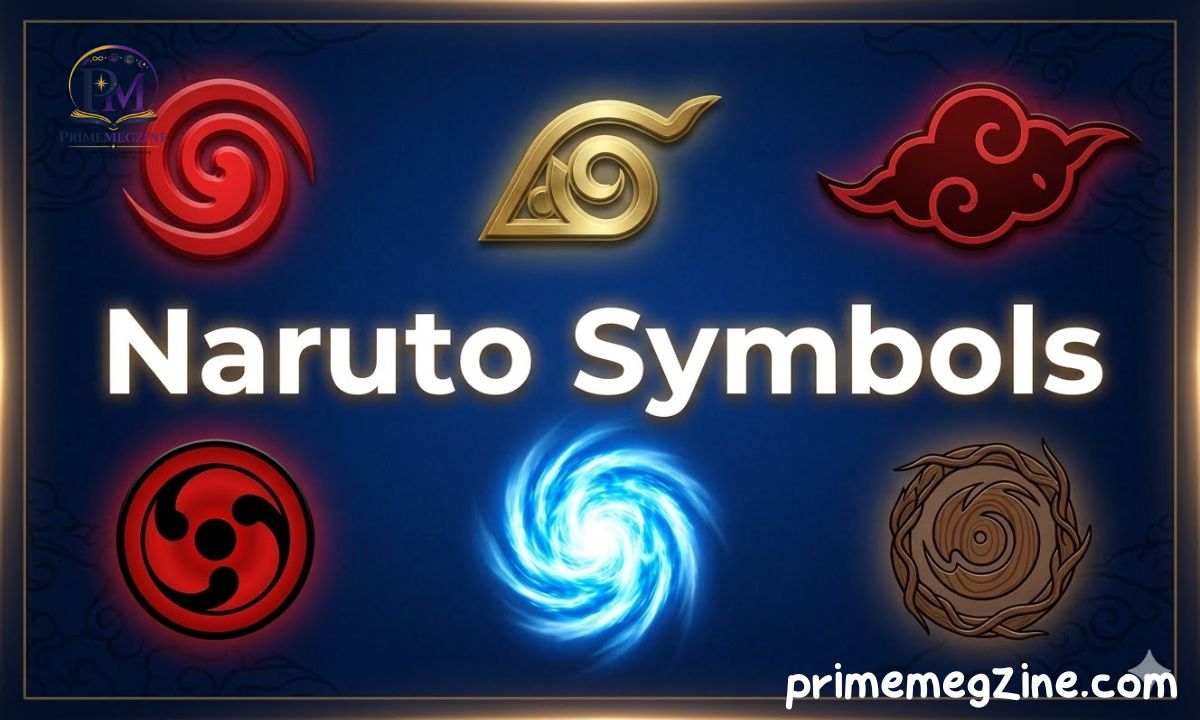
A red spiral, most recognizable on Naruto’s jacket and across Hidden Leaf Village uniforms.
Meaning
The spiral represents life force, resilience, and continuous motion. Spirals carry similar meaning in several real-world traditions, where they often stand for cycles, growth, and spiritual continuity.
Where It Appears
It shows up on Naruto’s clothing, on Konoha shinobi gear, and throughout locations tied to the Hidden Leaf Village. It is one of the most recognized Naruto symbols in the entire series.
The spiral also tracks Naruto’s personal arc. No matter how many times he is knocked down, he keeps moving, much like a spiral that never truly stops turning.
Uchiha Clan Symbol
Visual Description
A red and white fan-shaped crest, known in the series as the Uchiha fan.
Meaning
The fan ties to fire, reflecting the clan’s mastery of fire-style jutsu. It also represents pride, strength, and the destructive pull of revenge that consumed much of the clan’s history.
Where It Appears
It appears on Sasuke’s clothing and throughout spaces connected to the Uchiha Clan.
The symbol carries real emotional weight for longtime fans. It represents a clan that wanted peace but was slowly consumed by isolation, hatred, and loss instead.
Akatsuki Cloud Symbol
Visual Description
A red cloud outlined in white, set against solid black cloaks.
Meaning
The cloud is tied to conflict, sorrow, and rebellion against a corrupt shinobi system. It reads like lingering pain that never quite fades.
Where It Appears
It appears on the cloaks worn by Akatsuki members, including Itachi, Pain, and Kisame.
This symbol resonates with fans because Akatsuki members were rarely portrayed as simply evil. Many were shaped by war, loss, and broken systems long before they became villains.
Hidden Leaf Village Symbol
Visual Description
A stylized spiral leaf, worn on forehead protectors across the Hidden Leaf Village.
Meaning
The symbol stands for unity, loyalty, and the Will of Fire philosophy that defines Konoha shinobi. The leaf itself ties to growth and life.
Where It Appears
It appears on the headbands worn by Leaf Village ninja throughout the series.
For Naruto specifically, this symbol carries extra weight. As a child who grew up isolated and rejected, wearing the headband became proof that he finally belonged somewhere.
Curse Mark Symbol
Visual Description
Dark, flame-like markings that spread across the body once activated.
Meaning
The curse mark represents temptation, corrupted power, and the slow loss of self-control that comes with chasing strength at any cost.
Where It Appears
It appears primarily on Sasuke and on several of Orochimaru’s followers.
This symbol connects with fans on a psychological level because it mirrors something very real: how anger, ambition, or obsession can quietly take over a person from the inside.
Naruto Symbols Across Cultures
Japanese Culture
Japanese tradition shapes nearly every Naruto symbol in some way. Clan crests resemble real kamon family emblems, while many spiritual ideas in the series draw on Shinto and Buddhist concepts. The Senju clan symbol, for example, is based on a vajra, a ritual object tied to Buddhist and Hindu tradition representing unbreakable force.
Chinese Culture
Several ideas in Naruto echo Chinese philosophy, particularly the concept of yin and yang. The series repeatedly explores balance between opposing forces, including peace and war, love and hatred, light and shadow.
Hindu Spiritual Influence
The chakra system used throughout Naruto borrows loosely from Hindu spiritual tradition, where chakras represent energy centers connected to the body and mind. Naruto reshapes this concept into a system of ninja power rather than a literal spiritual practice.
Western Interpretation
Western fans tend to read Naruto symbols through a psychological lens rather than a spiritual one. Many view the spiral, the cloud, or the curse mark as stand-ins for trauma, identity, and personal resilience rather than religious symbolism.
Modern Global Culture
Today, Naruto symbols exist far outside the anime itself. They show up in streetwear, tattoo studios, gaming culture, and social media, where they represent determination, friendship, and individuality to a global fanbase.
Naruto Symbols in Art, Movies and Pop Culture
Tattoos
Naruto tattoos remain popular because the symbols carry personal meaning beyond the show itself. Someone who struggled with isolation might choose the Uzumaki spiral, while someone processing pain might lean toward the Akatsuki cloud.
Fashion
Streetwear brands frequently use Naruto symbols on hoodies, sneakers, and accessories. These designs are shorthand for strength, rebellion, and identity, even to people who only know the series casually.
Movies and Media
Naruto’s visual symbolism has influenced other anime and media that explore similar themes of destiny, sacrifice, and inner conflict, extending the reach of these designs well past the original series.
Art and Fan Creations
Fan artists continue to reinterpret these symbols in paintings, digital art, and sculpture. Part of their staying power comes from how visually simple they are while still carrying heavy emotional weight.
Spiritual and Dream Meaning of Naruto Symbols
Some fans report seeing these symbols in dreams, especially when they feel a strong personal connection to the series. While this interpretation is personal rather than scientific, here is how many fans read it:
Seeing the Uzumaki Spiral in Dreams
Many fans associate this with personal growth or moving through a difficult stretch of life, since spirals are widely linked to transformation and continuity.
Seeing the Akatsuki Cloud
Fans often connect this to unresolved pain, anger, or a feeling of being at odds with an unfair situation.
Seeing the Hidden Leaf Symbol
This is commonly tied to a desire for safety, friendship, or a sense of belonging.
Seeing the Curse Mark
Some fans read this as a sign of struggling with temptation or fear of losing control over a part of life.
Positive and Negative Meanings of Naruto Symbols
Part of what makes these symbols feel realistic is that almost all of them hold both a positive and a negative meaning at once.
| Symbol | Positive Meaning | Negative Meaning |
| Uzumaki Spiral | Hope, resilience, growth | Endless struggle, repeated hardship |
| Uchiha Fan | Strength, family pride | Revenge, isolation |
| Akatsuki Cloud | Change, defiance of corruption | Violence, destruction |
| Curse Mark | Ambition, drive for power | Obsession, loss of control |
| Hidden Leaf Symbol | Unity, belonging | Blind loyalty |
This duality is intentional. Naruto consistently shows that real strength comes from acknowledging both sides of a person rather than denying either one.
Why Humans Feel Drawn to Naruto Symbols
People connect with these designs because emotions are easier to process visually than verbally. Fans see pieces of themselves in Naruto’s loneliness, Sasuke’s anger, or Itachi’s sacrifice, and the symbols tied to those characters become a kind of emotional shorthand.
A few reasons this connection runs so deep:
- Symbols bypass language and speak directly to feeling
- Wearing a symbol lets fans express values like loyalty or resilience without saying a word
- Shared symbols create a sense of community among fans, similar to how tribal emblems once worked in real history
- A single design can hold years of personal memory for someone who grew up with the series
Naruto Symbols and Their Hidden Connection to Real Life
Much of Naruto’s symbolism lines up with real emotional experiences. Naruto’s seal reflects the burdens people hide from others. Sasuke’s curse mark mirrors how trauma can slowly take over someone’s identity. The Akatsuki cloud reflects how unresolved suffering can push a person toward darker choices.
This is part of why the series has stayed relevant long after it ended. The world is fictional, but the emotions behind each symbol are not, which keeps fans coming back to these designs years later.
FAQs About Naruto Symbols
What is the most famous Naruto symbol?
The Hidden Leaf Village symbol is the most recognized, largely because it appears on the forehead protectors worn by nearly every Konoha shinobi in the series.
What does the Akatsuki cloud symbol mean?
It represents war, pain, and rebellion against a broken shinobi system, reflecting the emotional scars carried by many Akatsuki members.
Why is the Uzumaki symbol a spiral?
The spiral reflects life force, resilience, and continuous growth, mirroring Naruto’s own journey of never giving up.
Are Naruto symbols inspired by real Japanese culture?
Yes. Many designs draw loosely on Japanese clan crests, Buddhist concepts, and Shinto tradition, reshaped for the story.
What does the Uchiha symbol represent?
The fan represents fire, family pride, and the destructive cost of revenge that shaped much of the clan’s history.
Why do people tattoo Naruto symbols?
Fans tattoo these symbols because they personally connect with themes like resilience, loyalty, pain, and growth found in the series.
Conclusion
Naruto symbols are far more than anime artwork. Each spiral, cloud, and clan crest carries an emotional thread tied to identity, sacrifice, and the search for belonging that runs through the entire series.
That emotional depth is exactly why these designs have outlasted the show itself. Long after the final battle, the meanings behind Naruto symbols continue to live on in the fans who saw their own stories reflected inside them.

Steve Carell writes simple Symbol Meanings articles on primemegzine.com, helping readers easily understand signs, symbols, and hidden meanings.