Hera symbols carry a kind of quiet authority that still shows up in marriage vows, jewelry boxes, and even the names women give their daughters. Long before Hera became a footnote in pop culture retellings, she was the goddess ancient Greeks turned to for protection over marriage, family, and the home.
Her symbols were never just decoration. They were a visual shorthand for loyalty, power, and the watchfulness that holds a household together.This guide breaks down every major Hera symbol, what it meant in ancient Greece, and why these images still resonate in art, dreams, and modern spirituality today.
What Are Hera Symbols?
Hera symbols are the sacred objects, animals, and images the ancient Greeks associated with Hera, queen of the Olympian gods and goddess of marriage, women, and childbirth. As the wife of Zeus and one of the twelve Olympians, Hera ruled over the sanctity of marital bonds, and her symbols reflected that domestic and royal authority.
Unlike the symbols of war gods or love goddesses, Hera’s emblems lean into themes of commitment, fertility, and guarded dignity. They appeared on temple carvings, coins, pottery, and household shrines across major worship centers like the Heraion of Argos and the Heraion of Samos. Each symbol gave ordinary worshippers a way to call on a very specific part of Hera’s power, whether that was fertility, protection, or royal legitimacy.
Here is a quick snapshot before diving deeper:
| Symbol | Core Meaning | Where It Commonly Appears |
| Peacock | Watchfulness, beauty, pride | Hera’s chariot, classical art, jewelry |
| Pomegranate | Fertility, marriage, life and death | Wedding rituals, temple statues |
| Crown (Diadem) | Royal authority, sovereignty | Statues, coins, modern pageantry |
| Cuckoo | Courtship, deception, compromise | Hera’s scepter, ancient gems |
| Cow | Nurturing, maternal strength | Early cult titles, Argive worship |
| Lotus Staff | Renewal, gentle authority | Reliefs of Hera as “Parthenos” |
| Lion | Ferocity, protection | Later artistic and literary depictions |
Deep Symbolic Meaning of Hera Symbols
Each Hera symbol works on more than one level at once. To really understand them, it helps to look at three layers of meaning.
Spiritual Level
On a spiritual level, Hera’s symbols point to vigilance and sacred boundaries. The peacock’s eye-marked tail suggests that nothing sacred goes unguarded, while the pomegranate’s blood-red seeds tie marriage to the larger cycle of life, death, and renewal. These images remind worshippers that covenants, divine or human, are meant to be witnessed and honored.
Psychological Level
Psychologically, Hera’s symbols speak to attachment, betrayal, and resilience. Carl Jung’s followers often describe Hera as the archetype of the committed wife who must learn to hold dignity even after humiliation. Her crown represents self-respect that refuses to collapse under pressure, while the cuckoo on her scepter is a quiet nod to the fact that even the strongest unions can start with deception. For many modern readers, these symbols mirror the tension between wanting to trust fully and needing to protect personal boundaries.
Cultural Level
Culturally, Hera’s symbols reinforced very real social structures in ancient Greece. The crown legitimized queens and brides alike. The pomegranate, often buried with brides or used in wedding rites, tied a woman’s fertility to the stability of the household. Annual festivals like the Heraia in Argos paraded these symbols through the city as a way of renewing collective protection over marriage and family life.
Types and Variations of Hera Symbols
Here is a closer look at the most important Hera symbols and what each one represents.
1. The Peacock
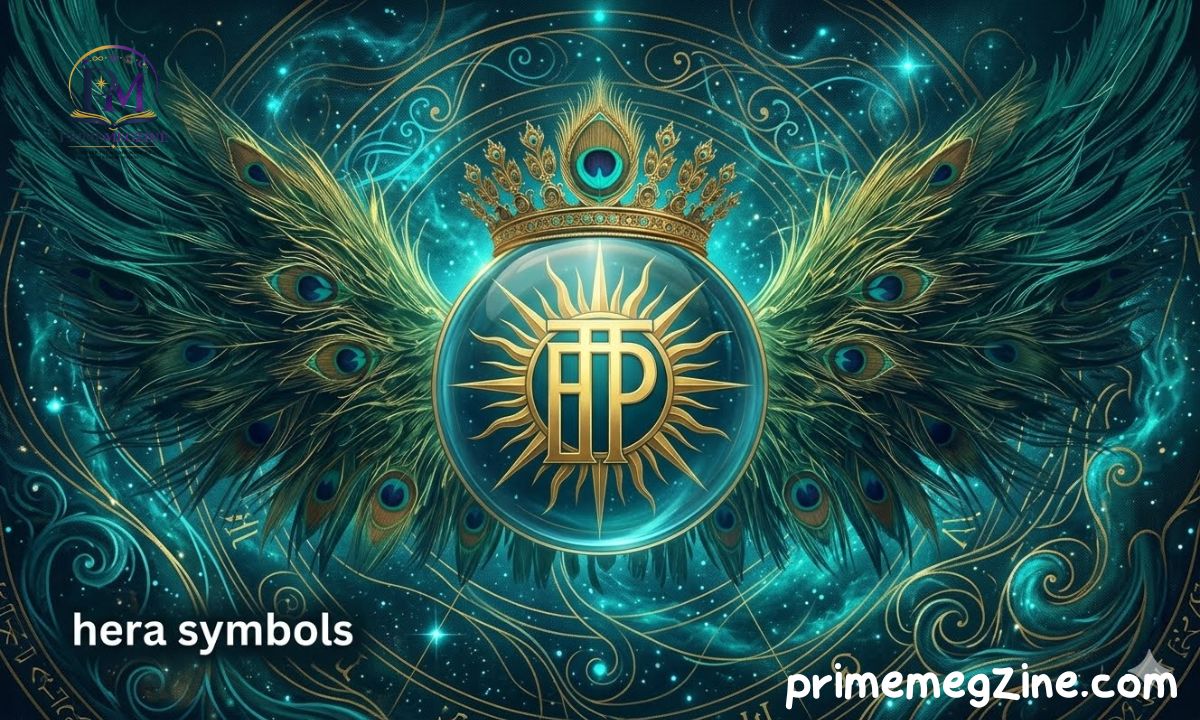
The peacock is Hera’s most iconic symbol. According to myth, it carries the hundred eyes of Argus Panoptes, the loyal giant Hera placed to guard Zeus’s lover-turned-heifer, Io. After Argus was killed, Hera honored him by setting his eyes into the peacock’s tail.
- Represents watchfulness, pride, and royal beauty
- Appears on Hera’s chariot and in classical Greek and Roman art
- In dreams, a peacock can signal jealousy or a sense of being watched
2. The Pomegranate
A round fruit bursting with ruby seeds, the pomegranate ties Hera to fertility and the binding nature of marriage.
- Symbolizes fertility, abundance, and the permanence of marital vows
- Used in ancient Greek wedding ceremonies and temple offerings
- Carries a darker undertone too, echoing Persephone’s binding to the underworld through seeds
3. The Crown or Diadem
Hera is almost always shown wearing a crown, marking her as Queen of Olympus.
- Stands for sovereignty, legitimacy, and dignified authority
- Appears in nearly every classical statue and relief of Hera
- Influenced later royal iconography, including Roman empresses honoring Juno Regina
4. The Cuckoo
A lesser-known but meaningful symbol, the cuckoo refers to the myth that Zeus disguised himself as this bird to win Hera’s affection.
- Represents courtship, but also deception and compromise
- Often shown perched atop Hera’s scepter
- A reminder that even divine marriages can have complicated beginnings
5. The Cow
Hera was sometimes called “cow-eyed,” a phrase meant as a compliment describing large, calm, beautiful eyes.
- Symbolizes nurturing, maternal strength, and gentle power
- Tied to early agrarian worship of Hera before her cult became more Olympian
- Connects her to fertility and the prosperity of the household
6. The Lotus Staff
A wand tipped with a lotus flower appears in some classical depictions of Hera, particularly as “Parthenos” or Maiden.
- Symbolizes renewal, gentle authority, and rebirth
- Reflects cross-cultural influence from Egyptian divine imagery
- Suggests that marriage, like a lotus, can bloom even from difficult beginnings
Hera Symbols Across Cultures
Hera’s symbols did not stay confined to Greece. They evolved as they traveled across civilizations and time periods.
Ancient Greece: Hera’s symbols were treated as literal, legal markers of status. Her peacock appeared on coins from Samos, and pomegranates were closely tied to bridal rites in cities like Argos.
Ancient Rome: The Romans renamed her Juno. Her symbols became more political, with the peacock remaining sacred and the pomegranate tied to married women’s legal standing. Juno’s crown was later worn by Roman empresses to legitimize their rule.
Near East and Egypt: Hera blended with goddesses like Isis and Astarte. The lotus staff almost certainly borrowed from Egyptian symbols of divine birth, showing how marriage goddesses across regions leaned on similar imagery of fertility and renewal.
Modern Neopagan and Feminist Movements: Today, Hellenic polytheists and Wiccans use peacock feathers in protection and marriage rituals. Feminist reinterpretations of mythology recast Hera’s crown not as submission, but as the quiet weight carried by women who choose to stay and rebuild rather than walk away.
Hera Symbols in Art, Movies, and Pop Culture
Hera’s symbols show up far more often in modern media than most people realize.
- Movies: In Percy Jackson & the Olympians, Hera-related clues include pomegranates and peacock feathers tied to plot twists involving loyalty and betrayal.
- Paintings: Peter Paul Rubens’ famous depiction of Juno and Argus leans heavily on peacock feather imagery to tell the Argus myth visually.
- Books: Rick Riordan’s young adult novels use the cuckoo motif to hint at Hera’s complicated loyalty to Zeus despite his repeated betrayals.
- Fashion and Tattoos: Peacock feather tattoos are popular among people who want to signal resilience after betrayal, while pomegranate tattoos often symbolize fertility, rebirth, or surviving a difficult relationship.
Spiritual and Dream Meaning of Hera Symbols
When Hera’s symbols show up outside of mythology books, many people read them as personal spiritual messages.
- Dreaming of a peacock: A peacock with its tail spread may suggest you are being watched or gossiped about. A peacock with a closed tail can point to secrets you are not yet ready to face.
- Dreaming of a pomegranate: Opening a pomegranate in a dream often symbolizes accepting a serious commitment, whether that is a relationship, a pregnancy, or a long-term project.
- Meditating on the crown: Feeling the weight of a crown during meditation can be a sign that you need to stop minimizing your own authority or voice.
- Encountering the lotus or cow imagery: These often point toward themes of nurturing, patience, and slow, steady renewal rather than sudden change.
Positive vs Negative Meanings of Hera Symbols
Like most ancient symbols, Hera’s emblems carry both light and shadow.
| Symbol | Positive Meaning | Negative Meaning |
| Peacock | Beauty, protection, vigilance | Jealousy, paranoia, distrust |
| Pomegranate | Fertility, abundance, renewal | Obligation, entrapment |
| Crown | Dignity, legitimate authority | Isolation, unbearable pressure |
| Cuckoo | Devotion, persistence in courtship | Deception, manipulation |
| Cow | Nurturing strength, patience | Passivity, being overlooked |
The lesson behind this duality is simple: a symbol’s meaning often depends on the situation it is reflecting. Hera herself was both a protector of marriage and, in many myths, a punisher of those who threatened it. Her symbols were never meant to be one-dimensional.
Why Humans Are Attracted to Hera Symbols
People are drawn to Hera symbols because they answer a very human question: how do you commit to someone without losing yourself in the process?
The peacock offers the comforting fantasy of total awareness, as if watching closely enough could prevent betrayal. The pomegranate offers a sense of control over fertility and legacy. The crown offers the dignity that heartbreak cannot strip away.
Hera’s mythology is also one of the most emotionally complex in the entire Greek pantheon. She is not rewarded with an easy, conflict-free marriage. Instead, she endures, schemes, and ultimately survives within an imperfect union. Her symbols are not trophies of victory. They are markers of endurance, which is exactly why they still resonate with people navigating real relationships today.
Frequently Asked Questions About Hera Symbols
What is Hera’s most powerful symbol?
The peacock is widely considered her most powerful symbol because of its connection to Argus and its representation of unwavering vigilance over marriage.
Why is the pomegranate associated with Hera?
The pomegranate symbolizes fertility and the unbreakable bond of marriage, and it was commonly used in ancient Greek wedding rituals.
What does Hera’s crown represent?
Her crown represents sovereignty, legitimate authority, and the dignity that comes with her role as Queen of Olympus.
Is the cuckoo a positive or negative symbol for Hera?
It is mixed. It recalls Zeus’s courtship of Hera but also hints at the deception involved in how their marriage began.
What does a peacock feather mean in modern spirituality?
Many modern practitioners use peacock feathers for protection, confidence, and clarity, especially in matters involving trust and fidelity.
Can Hera’s symbols be used in weddings today?
Yes. Pomegranates, peacock motifs, and crown-inspired jewelry are still incorporated into modern wedding ceremonies as nods to lasting commitment.
Conclusion
Hera symbols are far more than relics from ancient temples. The peacock’s watchful eyes, the pomegranate’s binding seeds, and the crown’s quiet weight all speak to something timeless about commitment, dignity, and resilience. Whether you encounter these symbols in a museum, a dream, or a piece of jewelry, they carry the same message they always have: real loyalty asks for both vigilance and grace.

Steve Carell writes simple Symbol Meanings articles on primemegzine.com, helping readers easily understand signs, symbols, and hidden meanings.