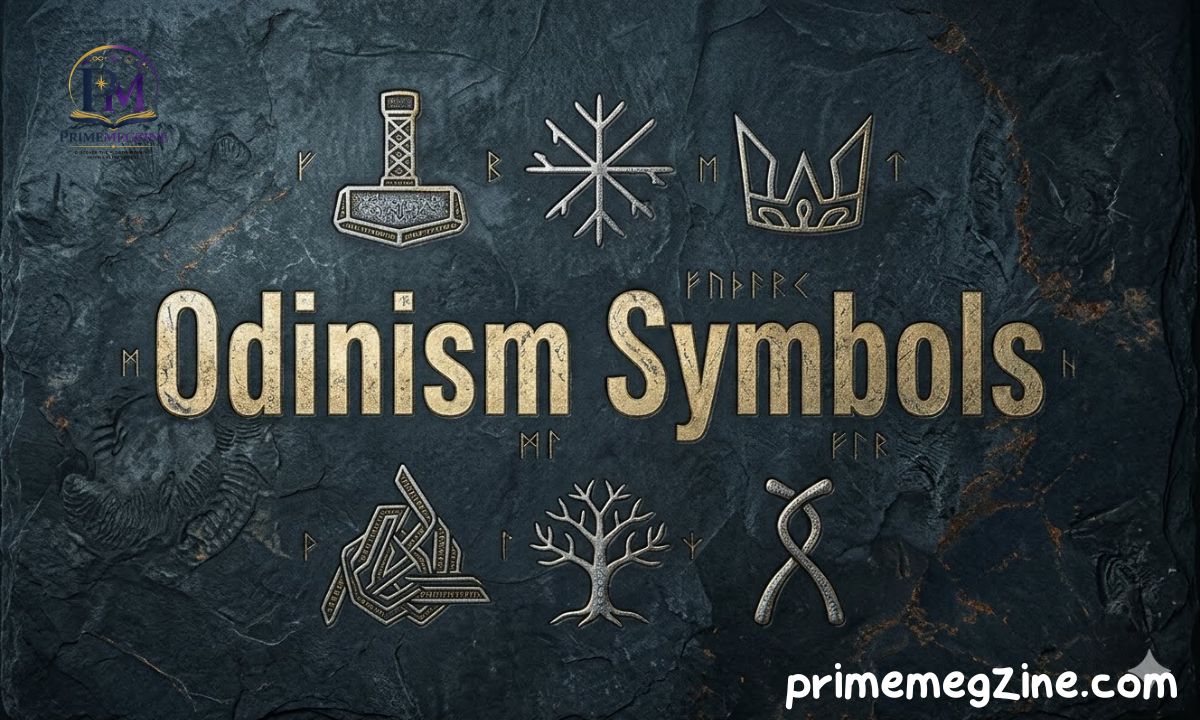
Odinism symbols are an important part of Norse spirituality and ancient traditions. These symbols carry deep meanings related to wisdom, strength, protection, courage, and the connection between humans and the gods. Many of them come from old Norse myths and Viking culture that have fascinated people for centuries.
In this guide, you will discover 53+ powerful Odinism symbols and their meanings. From the famous Valknut to the mighty Mjölnir, each symbol tells a unique story about faith, destiny, and spiritual beliefs. Understanding these symbols can help you explore the rich world of Norse spirituality and its lasting influence today.
What Are Odinism Symbols?
Odinism symbols are sacred signs tied to Odinism, a modern revival of pre-Christian Norse belief centered on Odin, the Allfather of the Norse pantheon. Their roots trace back over a thousand years to the Vikings and the wider Germanic-speaking peoples of Northern Europe.
In Old Norse mythology, gods like Odin, Thor, and Freyja governed the cosmic order, and symbols were never just decoration. They were tools for protection, identity, and communication with the divine.
You’ll typically find these symbols in:
- Ancient runestones and carvings
- Viking weapons, shields, and armor
- Amulets and ritual objects
- Modern tattoos and jewelry
- Contemporary pagan and spiritual practice
Each symbol carries layered meaning. Some of it is obvious at a glance, some takes digging to uncover.
Deep Symbolic Meaning
Spiritual Level
Odinism symbols act as a bridge between the human and the divine. Runes, in particular, were believed to hold real power, capable of shaping outcomes and influencing fate itself.
Psychological Level
Strip away the mythology, and these symbols speak to something universally human: the search for wisdom, the struggle to accept fate, and the courage required to face chaos. They speak to the seeker, the warrior, and the thinker in all of us.
Cultural Level
Culturally, these symbols represent heritage and identity. For many, wearing or studying them is a way of connecting to ancestral roots and values like resilience, honor, and strength.
Types / Variations of Odinism Symbols
Here are the most recognized and historically significant Odinism symbols.
| Symbol | Visual | Core Meaning |
| Valknut | Three interlocking triangles | Death, fate, warriors chosen by Odin |
| Yggdrasil | A massive world tree | Interconnectedness of all realms |
| Huginn & Muninn | Two ravens | Thought and memory |
| Gungnir | A rune-carved spear | Authority and unerring precision |
| Runes (Elder Futhark) | Angular alphabet symbols | Language, magic, divination |
| Helm of Awe | Radiating circular sigil | Protection and courage |
| Mjölnir | Short-handled hammer | Protection and blessing |
1. Valknut (The Knot of the Slain)
Visual: Three interlocking triangles Meaning: Death, the afterlife, and Odin’s connection to fallen warriors Where it appears: Runestones, burial sites, Viking-era artifacts
The Valknut is one of the most debated symbols in Norse iconography. The popular interpretation links it to warriors chosen by Odin for Valhalla, marking the transition between life and death. Scholars note the exact meaning isn’t fully settled, but its appearance at burial sites strongly ties it to themes of mortality and honor.
2. Yggdrasil (The World Tree)
Visual: An immense tree linking different realms Meaning: The interconnectedness of existence Where it appears: Norse cosmology, art, storytelling
Yggdrasil isn’t just a tree in Norse myth, it’s the structure holding the universe together, binding gods, humans, giants, and spirits into one living system.
3. Huginn and Muninn (Odin’s Ravens)
Visual: Two ravens Meaning: Thought (Huginn) and Memory (Muninn) Where it appears: Odin’s mythology, modern raven imagery and tattoos
Each dawn, legend says, these two ravens flew across the Nine Worlds and returned to whisper everything they’d seen into Odin’s ear. They represent the mind’s reach: the ability to observe, remember, and learn.
4. Gungnir (Odin’s Spear)
Visual: A spear, often shown with runic engravings Meaning: Authority, precision, unbreakable oaths Where it appears: Mythological texts, warrior symbolism
Gungnir was said to never miss its target. Beyond its battlefield meaning, it symbolized total focus, much like a king’s scepter represents rightful authority.
5. Runes (Elder Futhark)
Visual: An alphabet of angular symbols Meaning: Language, magic, divination, and personal guidance Where it appears: Stones, charms, modern divination sets
Each rune in the Elder Futhark carries its own distinct meaning, used historically for writing, casting spells, and seeking insight into the future.
6. Helm of Awe (Ægishjálmr)
Visual: A circular sigil with eight radiating arms Meaning: Protection, courage, and warding off fear Where it appears: Icelandic magical staves, warrior folklore
Popularly framed as an ancient battle-symbol, much of the documented use of the Helm of Awe actually comes from later Icelandic folk-magic traditions rather than the Viking Age itself, though it remains powerful in modern practice.
7. Mjölnir (Thor’s Hammer)
Visual: A short-handled hammer Meaning: Protection, strength, blessing Where it appears: Jewelry, Viking burial finds, modern pagan practice
Mjölnir technically belongs to Thor, but it’s so woven into the broader Norse spiritual worldview that it’s almost always included alongside Odin’s own symbols.
Odinism Symbols Across Cultures
Ancient Norse Culture
These symbols were functional, not just artistic. They appeared in rituals, on weapons headed to battle, and in oral storytelling passed down for generations.
Germanic Tribes
Similar imagery shows up across the broader Germanic-speaking world, with regional variation in style but shared themes of fate, protection, and ancestry.
Medieval Europe
As Christianity spread across Scandinavia, many of these symbols were pushed underground, surviving in folklore and carvings rather than disappearing entirely.
Modern Pagan Movements
Today, groups practicing Heathenry, Ásatrú, and Odinism have revived these symbols as part of living spiritual practice rooted in pre-Christian Norse belief.
Global Interpretation
Outside any specific religious practice, these symbols have also become global shorthand for strength, mystery, and identity, especially in fashion and tattoo art.
Odinism Symbols in Art, Movies & Pop Culture
You’ve probably encountered these symbols without realizing it.
- Movies: Norse-inspired films lean on the Valknut, runes, and Yggdrasil as visual shorthand for fate and power
- Books: Fantasy literature borrows heavily from Norse iconography to signal ancient mysticism
- Tattoos: Many people choose these symbols as permanent, personal emblems of strength
- Fashion: Viking-inspired design has become its own aesthetic statement
- Video Games: Norse mythology shapes entire game worlds, from character design to lore
Across pop culture, these symbols consistently represent power, destiny, mystery, and inner resilience.
Spiritual & Dream Meaning of Odinism Symbols
Seeing these symbols in dreams or meditation is often interpreted as meaningful, particularly during periods of change.
- Valknut: A major life transition or transformation
- Runes: Guidance, or hidden knowledge surfacing
- Ravens: Reflection, awareness, or a message from the subconscious
- Yggdrasil: Growth, connection, or spiritual awakening
These interpretations are symbolic and personal rather than literal, but many people find them useful as prompts for self-reflection.
Positive vs Negative Meaning
Like most powerful symbols, these carry more than one side.
Positive Aspects
- Strength and courage
- Wisdom and the pursuit of knowledge
- Protection and guidance
- Connection to ancestry and heritage
Negative Aspects
- Heavy association with death and war in their original context
- Co-opting by extremist and white-nationalist groups in recent decades, which has nothing to do with the symbols’ original meaning but is a documented modern reality
- Surface-level or inaccurate use that strips the symbols of their actual history
It’s worth being clear-eyed here: most people drawn to these symbols are interested in heritage, mythology, or modern Heathen and Ásatrú practice, not extremism. But because a small, vocal fringe has misused Norse imagery in recent political contexts, knowing that history matters before wearing or sharing these symbols publicly. Context and intent count.
Why Humans Are Attracted to Odinism Symbols
There’s a reason this imagery feels magnetic rather than merely decorative. These symbols tap into:
- The hero’s journey archetype
- The mystery surrounding life and death
- A deep, universal desire for purpose and identity
People gravitate toward symbols that simplify complex truths, create belonging, and connect them to something larger than themselves. Odinism symbols do all three at once, part of why they’ve outlasted the empire that once carved them into stone.
FAQs
What do Odinism symbols represent?
They represent core spiritual themes like fate, wisdom, protection, and the connection between the human and divine worlds.
Are Odinism symbols religious?
Yes. They’re tied to Odinism and broader Norse pagan revival movements, though many people also use them culturally or artistically without religious intent.
Is the Valknut a symbol of death?
Yes, it’s strongly associated with death and the afterlife, particularly with warriors believed to be chosen by Odin.
Are runes magical?
Historically, yes. Runes were believed to hold magical properties and were used for divination, protection, and guidance.
Can anyone use Odinism symbols?
Yes, but understanding their real history and cultural weight, including the modern misuse by extremist groups, matters before using them publicly.
Are these symbols connected to Vikings?
Yes. Most of these symbols originate directly from Viking-era Norse culture and mythology.
Conclusion
Odinism symbols are more than ancient markings. They’re living echoes of some of humanity’s oldest questions about courage, sacrifice, and the tension between fate and free will.
In a world that often feels scattered and disconnected, these symbols offer something steadier: a reminder that we’re part of a much longer story, one written in myth, memory, and meaning that still resonates more than a thousand years later.
Steve Carell writes simple Symbol Meanings articles on primemegzine.com, helping readers easily understand signs, symbols, and hidden meanings.