
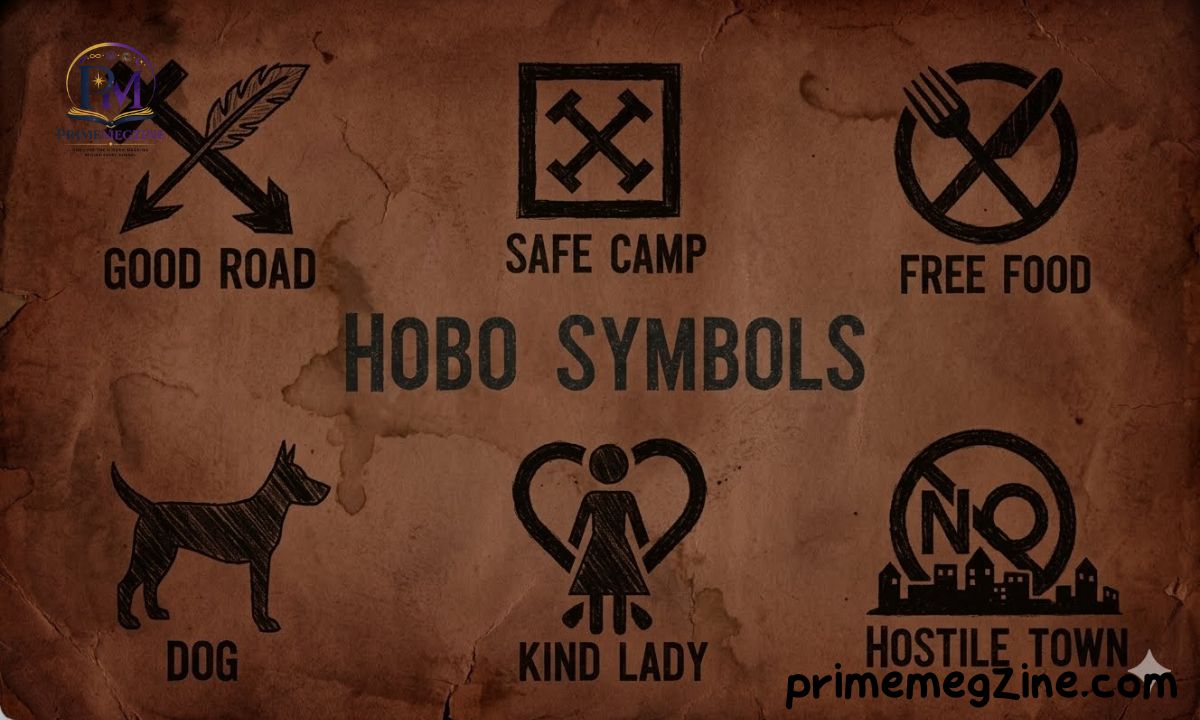
Hobo symbols are simple drawings and marks that were once used by travelers to share important information. These symbols helped people find food, shelter, work, or avoid danger while moving from place to place. They became a unique way of communicating without using words.
In this article, you will explore 93+ ultimate hobo symbols and their secret meanings. Each symbol tells a story and offers a fascinating look into the history, culture, and survival methods of early travelers and wanderers.
What Are Hobo Symbols?
Hobo symbols are simple pictures, lines, and shapes that traveling workers supposedly used to leave messages for one another during the late 1800s and early 1900s. Drawn with chalk, coal, or carved into wood, these marks were left near train yards, fences, bridges, and doorways.
The idea was practical: a tired, hungry traveler arriving in an unfamiliar town needed fast information. A few strokes could signal whether a house offered food, whether the local police were friendly, or whether a guard dog waited behind the gate.
Researchers today are divided on how much of this “code” was ever truly widespread. What is well documented, however, is that hoboes did leave marks called monikers, personal signatures noting a traveler’s nickname, the date, and the direction they were heading. Many of the symbol charts in circulation trace back to a single self-published source rather than confirmed historical practice.
The Hidden History Behind Hobo Symbols
Whether fact, exaggeration, or a mix of both, hobo symbols became part of the bigger story of how transient workers survived and communicated in a world without telephones for the poorest travelers.
History Of Hobo Symbols
The hobo lifestyle took shape after the Civil War, as veterans and laborers began hopping freight trains in search of work across the expanding rail network. Newspaper mentions of “tramp signs” and similar marks date back to the 1870s, showing that the public was already fascinated by the idea of a secret traveler’s code.
Hobo Symbols Great Depression
Interest in these symbols grew sharply during the 1930s, when millions of Americans lost jobs and homes. Riding the rails became one of the only ways to search for work, and stories about coded messages spread alongside the growing population of travelers.
Hobo Symbols During The Great Depression
During this period, the symbols associated with hobo culture often pointed toward churches, charitable households, or makeshift camps. Whether or not every mark was real, the stories reflected a genuine need: families and individuals were desperate for reliable ways to find help.
Great Depression Hobo Symbols
Common Depression-era symbols described in old charts include marks for food, water, danger, and shelter. These signs were typically simple enough to draw in seconds with whatever material was on hand, from a lump of coal to a sharp stone.
Hobo Code Symbols
The term “hobo code” refers to the broader idea of a shared visual system, separate from spoken language, that let strangers pass along survival information. Much of this code’s popularity traces back to Leon Ray Livingston, known as “A-No. 1,” whose self-published books included an early symbol chart.
Hobo Symbols System
A “system” implies consistency, but historians note that different printed charts often contradict each other. The same shape might mean opposite things depending on the source, which is one reason researchers remain skeptical about how organized this system truly was.
Hobo Language Symbols
Even without a verified, unified code, the broader concept of a hobo “language” endures in folklore. It represents how people on the margins of society found ways to share information without needing to read or write fluently.
Secret Hobo Symbols
Some symbols were framed as deliberately secretive, designed so outsiders wouldn’t recognize their meaning. This secrecy added to their mystique, even though documented evidence of consistent secret use remains thin.
Hobo Alphabet
Rather than letters and words, the so-called hobo alphabet used pictures and shorthand sketches. Each image stood in for a concept, similar to early pictographic writing systems used by ancient cultures.
Hobo Signs
Hobo signs were the physical markings themselves, usually quick sketches placed somewhere visible but easy to overlook unless you knew what to look for.
Hobo Signs Meaning
The meaning of any individual sign depended heavily on its shape, placement, and the chart it came from. A circle could warn of danger in one version and indicate a campsite in another.
Hobo Signs And Symbols
Together, hobo signs and symbols represent one of the most enduring pieces of American travel folklore, blending real moniker-marking traditions with romanticized stories of secret codes.
Modern Culture And The Mystery Of Hobo Markings
Modern Hobo Symbols
Today’s references to hobo symbols mostly come from books, museum exhibits, and pop culture rather than active daily use. Artists and historians recreate the classic marks to preserve the aesthetic and the story behind them.
Modern Day Hobo Symbols
Some modern train-hopping communities still use simplified markings, mostly monikers with dates and directional arrows, continuing a practice with much stronger historical backing than the symbol “code” itself.
Real Life Hobo Symbols
Groups like the Historic Graffiti Society have documented over a thousand pieces of genuine rail-era graffiti, most of which are monikers rather than coded warning symbols.
Train Hobo Symbols
Markings near railroad tracks and depots were the most practical kind, since this is where traveling workers spent the most time waiting, boarding, or resting.
Hobo Markings
These quick drawings were meant to be functional first. Materials were whatever was available, which is part of why so few original markings survive today.
Hobo Symbols Pdf
Many enthusiasts search for downloadable symbol charts to study the visual history in one place. These PDFs typically compile illustrations from old pamphlets and books for reference purposes.
Hobo Symbols Chart
A symbol chart usually groups marks by category, such as danger, food, shelter, and work. Below is a simplified example combining commonly cited meanings from historical sources.
| Symbol | Common Meaning |
| Cat | A kind woman lives here |
| Cross | Food available, often from a church or charity |
| Circle with arrows | Leave the area, trouble nearby |
| Wavy lines | Clean water source nearby |
| Triangle (upside down) | Dangerous or unsafe road ahead |
| Square or tent shape | Safe place to camp |
Hobo Symbols Meaning
Across most charts, the recurring themes are the same: warnings about danger, signals of generosity, and practical directions for finding water, food, or rest.
Hobo Symbols Triangle
Triangle shapes appear frequently in symbol charts, often pointed in different directions to represent different warnings, such as a blocked road or an unsafe path ahead.
Hobo Symbols Tattoo
Tattoo enthusiasts sometimes choose hobo-inspired designs to represent independence and resilience, drawing on the romanticized image of the free-spirited traveler.
Hobo Symbols Mad Men
The TV series Mad Men referenced hobo signs in a memorable storyline tied to the main character’s backstory, helping reintroduce the concept to a modern audience.
Hobo Symbols Walking Dead
Survival-themed shows like The Walking Dead have used similar coded markings between groups of characters, echoing the same practical logic associated with classic hobo signs.
Hobo Symbols Used In Cod Zombies
Players of the Call of Duty Zombies game mode have noted symbols reminiscent of hobo marks built into certain map environments, adding a layer of mystery to the game’s lore.
The History Behind Hobo Symbols
Riding the rails became common practice after the Civil War, as both veterans and unemployed laborers searched for work across a rapidly growing railroad system. The Great Depression later pushed this lifestyle into the mainstream, with millions of displaced workers relying on freight trains to move between job opportunities.
Atlas Obscura’s reporting on the topic notes that newspaper articles as far back as 1870 mentioned the possibility of “tramp signs” and “hobo hieroglyphics,” showing the idea was already part of public imagination well before the Depression era. Much of what people now consider the “hobo code” appears to stem from a single influential source: the writings of Leon Ray Livingston.
What is better documented is the moniker tradition, in which travelers carved or painted their nicknames along with travel dates and directions. This left a real, physical trail across train depots, water tanks, and bridges that researchers can still study today.
Deep Symbolic Meaning of Hobo Symbols
Spiritual Meaning
On a symbolic level, hobo markings represent guidance and quiet compassion during hardship. A mark pointing toward a safe meal wasn’t just practical information; for an exhausted traveler, it could feel like a small piece of hope.
Psychological Meaning
People under pressure naturally create shorthand systems to reduce fear and uncertainty. Similar coded communication shows up in other survival-focused communities, suggesting a basic human instinct to share warnings quickly and quietly.
Cultural Meaning
Culturally, these symbols became tied to ideas of resilience, independence, and life outside conventional society. Over time, the romanticized version of hobo culture grew into a broader symbol of freedom on the open road.
Common Types of Hobo Symbols and Their Meanings
Cat Symbol
A simple cat drawing is one of the most frequently cited hobo symbols, traditionally said to indicate a kind-hearted woman who might offer food or help.
Cross Symbol
A plain cross shape commonly appears in symbol charts as a marker for free food, often associated with churches or charitable households.
Circle With Two Arrows
This combination typically warned travelers to move along quickly, signaling possible danger or an unfriendly reception nearby.
Wavy Lines
Two or three horizontal wavy lines were used to point toward a nearby water source, a basic survival necessity for anyone on the road.
Angry Dog Symbol
A rough sketch of a barking dog warned of an aggressive animal guarding the property, helping travelers avoid an unpleasant surprise.
Safe Camp Symbol
A square or tent-like shape indicated a secure spot to rest for the night, away from traffic, danger, or unwanted attention.
Hobo Symbols Across Cultures
American Railroad Culture
In the United States, these symbols are closely tied to railroad expansion and Depression-era hardship, forming a lasting part of American folklore.
Ancient Nomadic Cultures
Long before American hoboes, nomadic groups across Asia and the Middle East used trail markings to help travelers navigate deserts and trade routes safely.
Medieval Europe
Wandering laborers and pilgrims in medieval Europe sometimes carved symbols into inns and roadside markers, sharing information about safe lodging or sacred routes.
Indigenous Trail Markings
Many Indigenous communities developed their own systems of natural trail markers to indicate water, direction, and danger, often blending seamlessly into the surrounding landscape.
Modern Urban Symbolism
Modern graffiti and street art occasionally echo this same impulse, using coded imagery and hidden messages to communicate within communities.
Hobo Symbols in Art, Movies and Pop Culture
Movies
Films set during the Great Depression sometimes use hobo-style markings to add authenticity and atmosphere to scenes about rail travel and survival.
Literature
Writers exploring themes of hardship and wandering often reference hobo symbols to add historical texture and emotional depth to their stories.
Tattoos
As mentioned earlier, tattoo designs inspired by hobo signs remain popular among people who want a visual nod to independence and resilience.
Fashion and Design
Vintage Americana fashion and graphic design occasionally borrow the rough, hand-drawn look of old hobo markings for an authentic, lived-in aesthetic.
Street Art
Some street artists intentionally reference hobo-style symbols to create a sense of hidden meaning within an urban setting.
Spiritual and Dream Meaning of Hobo Symbols
In dream interpretation circles, encountering hobo-style symbols is sometimes associated with feelings of uncertainty or a need for guidance. A dream involving a “safe” symbol may reflect a sense of relief or support arriving during a difficult period, while a warning symbol might point to underlying anxiety about a decision ahead.
Positive and Negative Meanings of Hobo Symbols
Positive Meaning
These symbols are often associated with kindness, adaptability, and solidarity among strangers facing similar struggles.
Negative Meaning
At the same time, the symbols are rooted in poverty and instability, with some marks specifically warning about violence, exploitation, or hostile authorities.
Why Humans Are Drawn to Hobo Symbols
People are naturally curious about hidden systems of meaning, and hobo symbols combine mystery with real emotional history. A few rough lines scratched into wood can suggest an entire untold story, which is part of why the topic continues to attract historians, artists, and casual readers alike.
Are Hobo Symbols Still Used Today?
The verified hobo code, as widely described in popular charts, is rarely if ever used in modern daily travel. However, the moniker tradition, marking a nickname, date, and direction, is still practiced by some modern rail riders. Groups researching rail history continue to document genuine markings, distinguishing them from the romanticized symbol charts that circulate online.
FAQs About Hobo Symbols
What were hobo symbols used for?
They were supposedly used to share quick survival information, such as warnings about danger or directions to food and shelter.
Are hobo symbols real or just folklore?
Genuine moniker marks are well documented, but most popular “code” charts are considered exaggerated or unverified by historians.
When were hobo symbols most common?
They are most associated with the late 1800s through the Great Depression era of the 1930s.
What does the cat symbol mean in hobo code?
In most charts, a cat symbol represents a kind woman likely to offer food or help.
Why are hobo symbols still popular today?
Their mix of mystery, survival history, and connection to freedom keeps them culturally relevant in books, shows, and games.
Conclusion
Hobo symbols sit in an interesting space between documented history and enduring folklore. The moniker tradition, names, dates, and directions left along the rails, is real and well recorded. The broader idea of a secret survival code is harder to confirm, though it remains a powerful piece of American storytelling.
Whether viewed as fact or legend, these markings capture something universal: people finding quiet ways to help strangers navigate an uncertain road.

Steve Carell writes simple Symbol Meanings articles on primemegzine.com, helping readers easily understand signs, symbols, and hidden meanings.