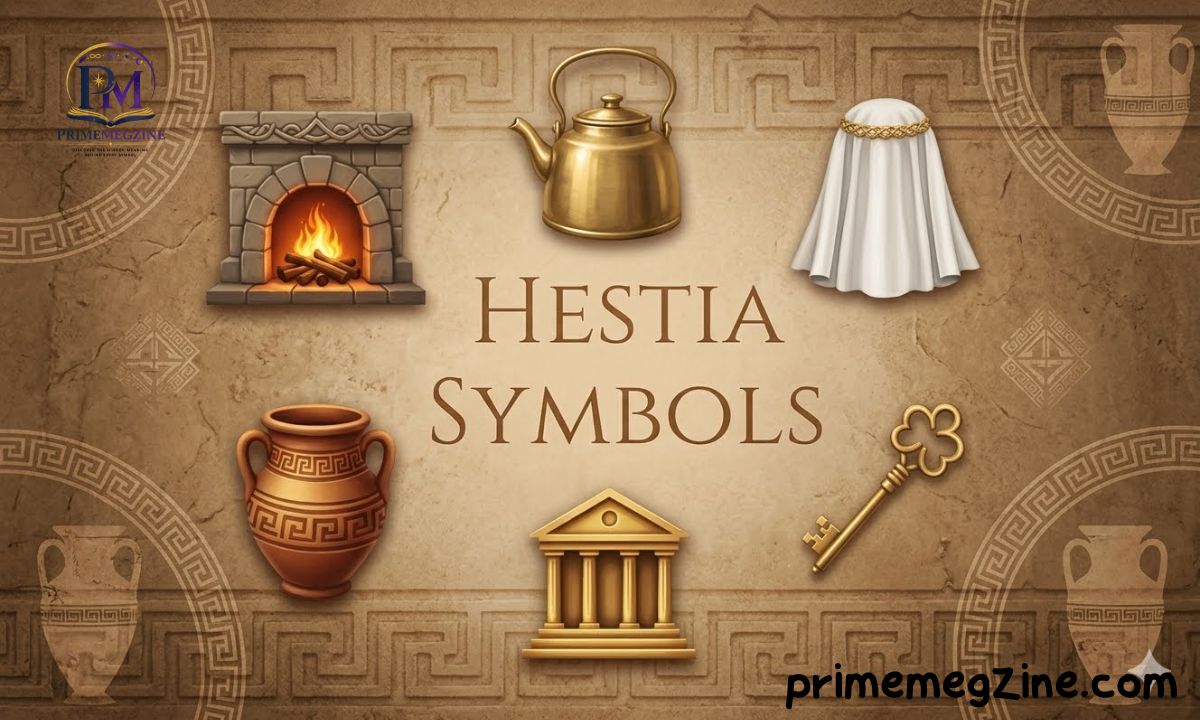
Hestia symbols may not be as famous as the symbols of other Greek gods, but they hold deep meanings connected to home, family, and inner peace. As the goddess of the hearth and sacred fire, Hestia represented warmth, protection, and stability in ancient Greek life. Her symbols continue to inspire people who value comfort, balance, and strong family connections.
From the eternal flame to the humble hearth, Hestia’s symbols reveal timeless lessons about belonging and emotional strength. These ancient signs have survived for centuries and still appear in modern culture, spirituality, art, and home design. In this guide, you’ll discover the most important Hestia symbols and the hidden meanings behind them.
What Are Hestia Symbols?
Hestia symbols are sacred signs connected to Hestia, the Greek goddess of the hearth, home, family, and domestic harmony. Unlike many Olympian gods known for war or adventure, Hestia represented peace, stability, and the warmth of shared living spaces.
Her symbols revolve around fire, protection, unity, and sacred household traditions. These ancient emblems continue to inspire modern ideas of comfort, belonging, and emotional security.
Historical Background
In ancient Greece, Hestia held a unique position among the Olympian gods. Every household maintained a hearth fire dedicated to her, and public buildings often contained sacred flames symbolizing community unity.
Important historical traditions included:
- Keeping the household fire burning continuously
- Offering the first portion of meals to Hestia
- Lighting colony fires from the mother city’s sacred flame
- Honoring Hestia before and after religious ceremonies
The hearth served as both a physical and spiritual center of Greek life.
Hidden Power Of Hestia Symbols
Hestia symbols may appear simple, but they carry deep symbolic meaning. They represent:
- Inner peace
- Family unity
- Emotional stability
- Spiritual grounding
- Sacred protection
These symbols remind people that true strength often comes from calmness, patience, and consistency rather than power or dominance.
Hestia Symbols And Meanings
| Symbol | Meaning |
| Sacred Flame | Eternal life, protection, purity |
| Hearth | Home, family, warmth |
| Circle | Unity, wholeness, eternity |
| Veil | Modesty, wisdom, inner strength |
| Kettle | Nourishment, transformation |
Each symbol reflects Hestia’s role as guardian of domestic harmony.
Hestia Symbols And Animals
Unlike many Greek deities, Hestia had few animal associations. Her symbolism focused more on household life than nature or warfare.
The animal most commonly linked to Hestia is the pig due to its role in household sacrifices and family-centered rituals.
Hestia Goddess
Hestia was the eldest daughter of Cronus and Rhea. She was one of the original Olympian deities and chose a peaceful life dedicated to maintaining sacred fires rather than seeking power or glory.
Her calm nature made her one of the most respected gods in Greek mythology.
Hestia Sacred Animal
The pig is traditionally considered Hestia’s sacred animal.
It symbolizes:
- Abundance
- Domestic life
- Nourishment
- Family prosperity
This connection highlights her focus on everyday blessings and household well-being.
Hestia Facts
Some fascinating facts about Hestia include:
- She was the firstborn child of Cronus and Rhea.
- She remained a virgin goddess throughout her life.
- She gave up her throne to Dionysus to maintain peace.
- Every Greek home honored her presence.
- She rarely appeared in myths involving conflict.
Symbols Of Hestia
The most recognized symbols of Hestia include:
- Eternal flame
- Hearth
- Circle
- Veil
- Cooking vessel
- Sacred fire altar
Together, these symbols represent security, continuity, and sacred domestic life.
Hestia Friends
Hestia maintained positive relationships with nearly all Olympian gods.
She shared close ties with:
- Zeus
- Hera
- Demeter
- Poseidon
Her peaceful personality allowed her to avoid the conflicts common among other deities.
Hestia Offerings
Ancient Greeks commonly offered:
- Bread
- Wine
- Olive oil
- Grain
- First portions of meals
These simple offerings reflected gratitude for household safety and prosperity.
What Are Hestia’s Powers?
Hestia’s divine powers focused on:
- Protecting homes
- Preserving sacred fires
- Promoting family harmony
- Encouraging peace
- Blessing domestic spaces
Unlike many gods, her powers centered on nurturing rather than conquest.
Greek Goddess Hestia Symbols Explained
Hestia’s symbols reveal her unique role among the Olympian gods. Every object associated with her reflects themes of comfort, stability, purity, and spiritual balance.
What Are Hestia Symbols?
Hestia symbols are visual representations of sacred household values including protection, unity, and warmth. They served as reminders of the importance of family and community.
Hestia Symbols And Powers
Her symbols directly reflect her powers.
- Flame = life and divine presence
- Hearth = protection and unity
- Circle = balance and eternity
- Veil = wisdom and humility
What Is Hestia Symbol?
The most important Hestia symbol is the eternal flame, representing continuity, sacred energy, and spiritual protection.
Hestia Symbols Greek Mythology
In Greek mythology, Hestia symbols emphasize domestic life rather than heroism or warfare. They focus on the sacred importance of home and family.
What Is The Symbol For Hestia?
The sacred hearth flame is considered the primary symbol for Hestia and remains the most recognizable representation of her divine presence.
Goddess Hestia Symbols
Popular goddess Hestia symbols include:
- Fire
- Hearth
- Veil
- Circle
- Cooking pot
These symbols communicate nurturing energy and peaceful strength.
Greek Mythology Hestia Symbols
Greek mythology portrays Hestia’s symbols as essential elements of everyday life, making her one of the most relatable Olympian deities.
Greek Goddess Hestia Symbols
Unlike symbols associated with war or power, Hestia’s symbols highlight care, compassion, and emotional security.
Symbols For Hestia
Common symbols for Hestia include:
- Sacred Flame
- Hearth
- Circle
- Veil
- Kettle
Each one carries unique spiritual significance.
Hestia Goddess Symbols
Hestia goddess symbols reflect her role as protector of households and keeper of sacred traditions.
Greek God Hestia Symbol
Although Hestia is a goddess, references to a Greek god Hestia symbol typically still point to the eternal flame and household hearth.
Deep Symbolic Meaning of Hestia Symbols
Spiritual Meaning
Spiritually, Hestia symbols represent:
- Sacred space
- Inner calm
- Soul connection
- Divine feminine energy
The eternal flame symbolizes a spirit that continues to shine through life’s challenges.
Psychological Meaning
Psychologically, these symbols connect with:
- Security
- Belonging
- Emotional balance
- Personal stability
They represent the comfort people naturally seek during difficult times.
Cultural Meaning
Across cultures, Hestia symbols reflect:
- Hospitality
- Family traditions
- Community unity
- Shared responsibility
They remind people of the importance of strong social bonds.
Types and Variations of Hestia Symbols
1. The Sacred Flame
The sacred flame symbolizes eternal life, spiritual purity, and divine protection.
2. The Hearth
The hearth represents home, nourishment, family gatherings, and emotional warmth.
3. The Circle
The circle symbolizes unity, completeness, eternity, and balance.
4. The Veil
The veil represents modesty, wisdom, sacred privacy, and hidden strength.
5. The Kettle or Pot
The kettle symbolizes nourishment, transformation, care, and abundance.
Hestia Symbols Across Cultures
Ancient Greece
Hestia’s sacred fire united families and communities throughout Greek society.
Ancient Rome
Hestia became Vesta, whose eternal flame was maintained by the Vestal Virgins.
Hindu Culture
The sacred fire deity Agni shares similarities with Hestia’s symbolic role as a divine protector.
Celtic Traditions
The Celtic goddess Brigid embodies many hearth and fire traditions similar to Hestia.
Modern Interpretations
Today, Hestia symbols appear in:
- Meditation practices
- Home decor
- Spiritual rituals
- Minimalist design
- Mindfulness traditions
Hestia Symbols in Art, Movies and Pop Culture
Movies
Fireplaces and hearth scenes often symbolize safety, family, and emotional healing.
Art
Artists portray Hestia as calm, graceful, and centered around sacred fire.
Books
Literature frequently uses the hearth as a symbol of homecoming and belonging.
Tattoos
Popular Hestia-inspired tattoos include:
- Flames
- Circles
- Hearth imagery
- Minimalist sacred symbols
Fashion
Warm colors, natural fabrics, and earth-inspired designs often reflect Hestia’s energy.
Spiritual and Dream Meaning of Hestia Symbols
Dreams involving Hestia symbols often suggest:
- Healing
- Protection
- Stability
- Self-discovery
Common Dream Interpretations
- Bright flame = confidence and clarity
- Fading fire = emotional exhaustion
- Building a hearth = desire for security
- Gathering around fire = stronger relationships
Positive vs Negative Meaning
Positive Aspects
- Peace
- Stability
- Protection
- Family connection
- Spiritual grounding
Negative Aspects
- Resistance to change
- Emotional withdrawal
- Excessive comfort-seeking
- Fear of uncertainty
Why Humans Are Attracted to Hestia Symbols
Psychological Reasons
Humans naturally seek safety, belonging, and emotional comfort. Hestia symbols represent these universal needs.
Emotional Connection
A glowing fire, warm home, or peaceful gathering place creates feelings of security. These emotions explain why Hestia’s symbols remain meaningful today.
FAQs About Hestia Symbols
What is the main symbol of Hestia?
The sacred flame is Hestia’s primary symbol and represents eternal protection and divine presence.
What do Hestia symbols represent spiritually?
They symbolize inner peace, sacred space, spiritual grounding, and divine feminine energy.
Are Hestia symbols still relevant today?
Yes. They continue to appear in mindfulness practices, home design, spirituality, and art.
What does the hearth symbolize in mythology?
The hearth symbolizes family unity, nourishment, protection, and emotional warmth.
Can Hestia symbols appear in dreams?
Yes. They often represent healing, security, comfort, and personal growth.
Is Hestia associated with feminine energy?
Yes. Hestia embodies nurturing, peaceful, and protective feminine qualities.
Conclusion
Hestia symbols remain powerful reminders of humanity’s deepest values: home, peace, connection, and stability. The sacred flame, hearth, circle, veil, and kettle all carry timeless lessons about emotional well-being and spiritual balance. While centuries have passed since ancient Greece, these symbols continue to inspire modern life by reminding us that true strength often comes from creating warmth, harmony, and belonging wherever we are.

Steve Carell writes simple Symbol Meanings articles on primemegzine.com, helping readers easily understand signs, symbols, and hidden meanings.