
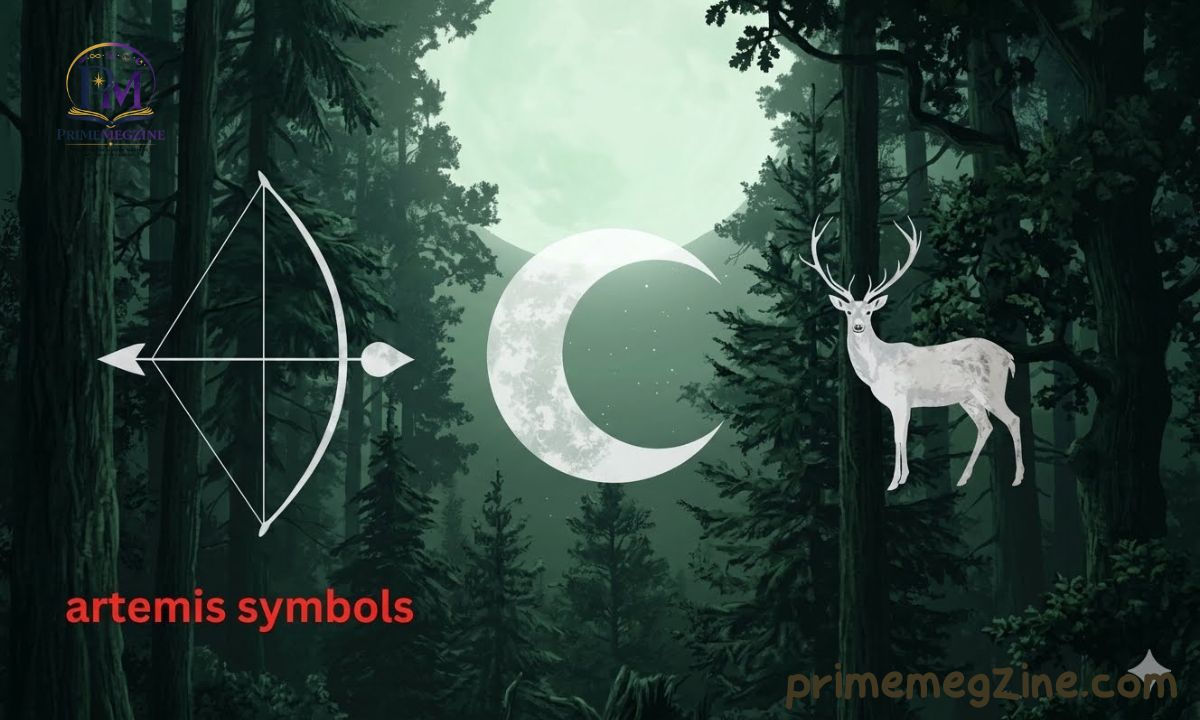
Artemis was one of the most respected goddesses in ancient Greek mythology. She was known as the goddess of the wilderness, hunting, wild animals, and the moon. Many symbols were connected to Artemis, helping people understand her power, independence, and strong connection to nature.
The symbols of Artemis carry deep meaning and appear in myths, art, and ancient temples. From the bow and arrow to the deer and crescent moon, each symbol represents an important part of her identity. In this article, we will explore the sacred icons of Artemis and discover what they reveal about the legendary wilderness goddess.
What Are Artemis Symbols?
Artemis symbols are the objects, animals, and natural elements ancient Greeks used to represent the goddess Artemis, daughter of Zeus and Leto and twin sister of Apollo. She ruled over wild animals, the hunt, childbirth, and the protection of young girls.
Artemis worship stretched from Ephesus, home to one of the Seven Wonders of the Ancient World, to the hills of Arcadia. Wherever her cult spread, certain symbols followed her image: the bow, the moon, the deer, the bear.
These were never decorative. A single symbol was enough to identify her instantly on a temple frieze or coin. They marked the line between civilization and wilderness, childhood and adulthood, life and death.
Artemis Symbols And Meanings
Artemis Goddess
Artemis was worshipped as the Greek goddess of hunting, wilderness, and the moon. She stood for independence, purity, and protection, and was closely tied to forests and wild animals.
Artemis Powers
Artemis guided hunters through dense forest, protected women through childbirth, and carried archery skills so precise that her arrows became a symbol of divine justice. Her speed and self-reliance made her one of the most admired and feared Olympians.
Artemis Meaning In Bible
The name Artemis shows up in the New Testament tied to Ephesus, where she was worshipped at one of the largest temples in the ancient world. The city clerk called Ephesus the guardian of the temple of the great Artemis and her image, said to have fallen from heaven. The reference shows how deeply her cult shaped daily life in the region.
Artemis Roman Name
The Romans called Artemis by a different name: Diana. Her core identity barely changed. Diana kept her role as goddess of the moon and the hunt, and Roman communities built groves and shrines to her across the empire.
Artemis Personality
Artemis carried a bold, independent personality that set her apart from many other goddesses. She preferred quiet forests over crowded cities, valued loyalty above almost everything, and refused to compromise her freedom for marriage or convention.
Who Was Artemis In The Bible?
In the Bible, Artemis appears as the goddess worshipped at Ephesus, central to a dramatic episode in the Book of Acts. A riot broke out in the city’s theater, with the crowd chanting in her praise for roughly two hours before officials calmed them down. The episode shows how tightly her worship was woven into Ephesian civic life.
Artemis Constellation
There is no officially recognized constellation named after Artemis in modern astronomy, but ancient stories often linked her to the night sky through moonlight and nocturnal hunting. This loose connection helped cement her reputation as a goddess of mystery and hidden beauty.
Deep Symbolic Meaning of Artemis Symbols
Spiritual Level
On a spiritual level, Artemis symbols represent the sacredness of wild, untouched places. The bow teaches precision and purpose. The moon reflects cycles and intuition, light that only appears in darkness. Encountering these symbols often signals a call to trust instinct and protect what matters.
Psychological Level
In Jungian terms, Artemis is often read as the archetype of the autonomous feminine, the part of the psyche that resists domestication. Her bow stands for focused intention and personal boundaries. The wilderness she rules represents the unconscious mind, full of both danger and wisdom.
Cultural Level
Culturally, Artemis symbols have been reclaimed by movements built around independence and bodily autonomy. Wilderness therapy programs, archery as a sport for girls, and conservation efforts all echo her ancient role as guardian of the wild.
Types and Variations of Artemis Symbols
1. The Silver Bow and Arrows
Visual description: A curved hunting bow, sometimes shown glowing or metallic, paired with a quiver of arrows slung across the back.
Meaning: The bow and arrow are widely recognized as Artemis’s signature symbols, representing her skill as hunter and protector. Her arrows could deliver swift justice or sudden death, depending on who provoked her.
Where it appears: Classical statues in major museums, Greek pottery, and modern illustrations of the goddess in mid-draw.
2. The Crescent Moon
Visual description: A curved sliver of light, often worn as a crown, especially in later Roman depictions of Diana.
Meaning: The crescent moon stands for lunar cycles and intuition, the kind of vision that only works in darkness. Unlike her brother Apollo’s blazing sun, Artemis carries reflected, quieter light.
Where it appears: Roman statues of Diana, Renaissance paintings, and modern jewelry inspired by lunar mythology.
3. The Deer (especially the Ceryneian Hind)
Visual description: A graceful doe, sometimes shown with golden antlers, often pulling Artemis’s chariot.
Meaning: The deer represents her dominion over the wilderness, along with grace and reverence for wild creatures. The myth of the Ceryneian Hind, tied to one of Heracles’s labors, shows how sacred this animal was to her.
Where it appears: Greek vases, temple carvings, and modern wildlife conservation branding.
4. The Bear
Visual description: A powerful she-bear, sometimes shown with cubs.
Meaning: The bear ties into fierce maternal protection and transformation. At Brauron, young Athenian girls danced as bears in rituals honoring the goddess before entering adulthood.
Where it appears: The sanctuary of Artemis at Brauron and classical ritual art.
5. The Cypress Tree
Visual description: A tall, slender evergreen with dark foliage.
Meaning: The cypress represents mourning and immortality, marking the thin boundary between life and death tied to Artemis’s connection with sudden mortality.
Where it appears: Ancient funerary art and sacred groves.
6. The Quiver and Hunting Boots
Visual description: A leather case for arrows, paired with laced boots built for rough terrain.
Meaning: These items symbolize readiness and independence. While many goddesses are shown barefoot, Artemis wears practical gear suited for forest and mountain.
Where it appears: Nearly every classical depiction of Artemis from the 5th century BCE onward.
| Symbol | Meaning |
| Bow and Arrows | Precision, justice |
| Crescent Moon | Intuition, hidden light |
| Deer | Grace, reverence for wildlife |
| Bear | Maternal protection |
| Cypress Tree | Mourning, immortality |
| Quiver and Boots | Readiness, independence |
Artemis Symbols Across Cultures
Ancient Greece
In mainland Greece, Artemis protected young girls until marriage, and her symbols marked the passage from childhood into adult responsibility. Her bow and deer regularly appeared on coins, temple friezes, and household shrines.
Ephesus (Asia Minor)
The Ephesian version of Artemis looked strikingly different from her mainland counterpart, blending local nature divinities with Greek identity into a many-breasted figure tied to fertility rather than the virginal huntress worshipped elsewhere. Her temple also functioned as a financial hub, drawing pilgrims from across the ancient world.
Roman Empire
The Romans renamed her Diana and merged her identity with their own moon and wilderness deities. Sacred groves dedicated to Diana sometimes served as protected refuges, and the crescent moon crown became an even more prominent symbol.
Modern Neopaganism
Today, Wiccans and eclectic pagans use Artemis symbols in ritual practice. The bow represents focused will, the moon marks full-moon ceremonies known as esbats, and the deer appears as a guide in meditation work.
Feminist Spirituality
Since the 1970s, Artemis symbols have been embraced as icons of independence and bodily autonomy. The lone archer who protects the vulnerable resonates strongly with movements centered on self-defense and personal sovereignty.
Artemis Symbols in Art, Movies, and Pop Culture
Movies
Katniss Everdeen from The Hunger Games echoes the Artemis archetype through her skill with a bow and her instinct to protect those younger than her. Brave‘s Merida pushes against arranged marriage and trains as an archer, drawing on similar themes of independence.
Paintings
Classical and Renaissance painters frequently returned to Artemis bathing in forest pools, paired with a crescent crown and a watchful deer, emphasizing both her vulnerability and her power.
Books
Modern retellings of Greek myth often portray Artemis as remote, merciless, and deeply connected to the natural world, keeping her symbols relevant for new generations of readers.
Tattoos
Artemis-inspired tattoos remain popular, especially among women and people drawn to themes of independence. Common designs include:
- A crescent moon paired with a bow
- A deer with antlers shaped like moon phases
- A bear paw alongside crossed arrows
- A cypress tree silhouette hiding a bow within its branches
Fashion
Designers have borrowed her imagery for decades, working crescent moons, hunting boots, and deer motifs into collections that lean into a rugged, natural aesthetic. Silver jewelry styled after lunar symbols remains a recurring trend tied directly back to her mythology.
Spiritual and Dream Meaning of Artemis Symbols
If Artemis symbols show up in dreams or meditation, consider these common interpretations:
- A bow or arrow suggests you need more focus, or that something requires precision rather than force.
- A calm deer signals grace under pressure, while a wounded or fleeing deer suggests avoidance of something that needs to be faced.
- A crescent moon points to new beginnings or knowledge that is about to surface.
- A protective bear suggests you need to defend someone vulnerable; a chasing bear suggests neglected personal needs.
- Cypress trees lining a path often represent a threshold or major life transition.
Positive vs. Negative Meanings of Artemis Symbols
Positive Meanings
- Protection of children, young women, and the vulnerable
- Independence and the courage to walk your own path
- Support during childbirth and major life transitions
- Justice against those who cause harm
Negative Meanings
- Sudden, harsh consequences for crossing boundaries
- Jealousy toward rivals in skill or beauty
- Vengeance carried out without room for mercy
- Strict exclusion of outsiders from sacred spaces
The same symbol can carry both meanings at once. A bow protects, but it also kills. A moon lights the path forward while hiding danger in its shadow. Artemis rarely asks you to pick a single interpretation.
Why Humans Are Attracted to Artemis Symbols
People are drawn to Artemis symbols because they represent parts of the self that often get suppressed. In a culture that demands constant availability, the bow represents the right to keep distance. In a world that polices how people move through public space, the deer represents freedom of movement.
There is also the pull of the outsider. Artemis was never the most popular goddess in the Greek pantheon, and her symbols were never meant to be pretty. They were meant to be useful, and that practicality still resonates with anyone who values self-reliance over performance.
Frequently Asked Questions
What is Artemis most famous symbol?
Her most famous symbol is the bow and arrow, closely followed by the crescent moon. The bow alone was enough to identify her in ancient Greek art.
What animal is sacred to Artemis?
The deer is her most sacred animal, especially the golden-antlered Ceryneian Hind. The bear also holds deep significance tied to her sanctuary at Brauron.
What flower represents Artemis?
The amaranth, a flower associated with never fading, is traditionally linked to Artemis. Moonflowers that bloom at night are also offered to her in modern practice.
Is Artemis a moon goddess or a hunting goddess?
She started as primarily a hunting goddess, with the lunar association growing stronger over time. By the Roman era, her role as moon goddess had become equally prominent.
Can men use or wear Artemis symbols?
Yes, though her sacred spaces traditionally excluded adult men. Many people today, regardless of gender, connect with her as a protector of outsiders and the vulnerable.
What does an Artemis tattoo mean?
An Artemis tattoo generally signals independence, protection of the vulnerable, or a personal connection to wilderness and self-reliance. Placement often reflects the specific meaning, such as a bow for readiness or a moon for intuition.
Conclusion
Artemis symbols are not relics of a forgotten religion. They are a living language for anyone who has ever needed to draw a boundary, trust their instincts, or protect something fragile without apology. The bow, the moon, the deer, and the bear all point back to the same truth: tenderness and ferocity can exist in the same body, and the wild parts of yourself are worth protecting.

Steve Carell writes simple Symbol Meanings articles on primemegzine.com, helping readers easily understand signs, symbols, and hidden meanings.