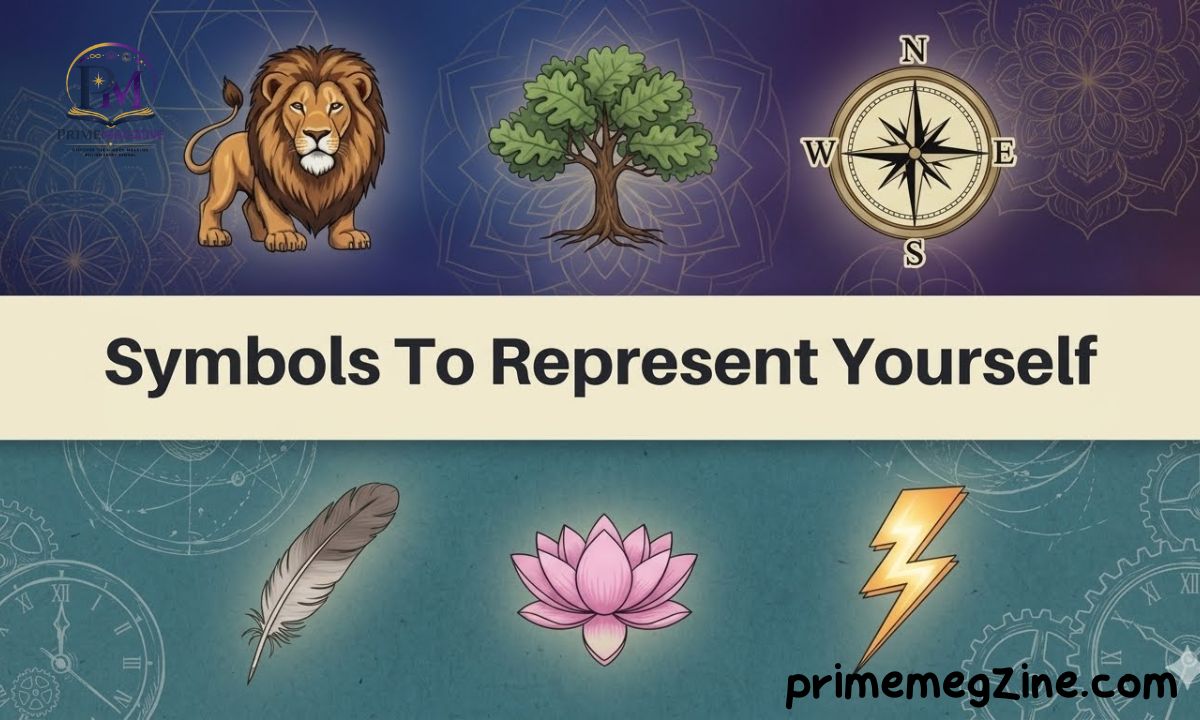
Symbols have long been used to express personality, beliefs, emotions, and life experiences. A simple symbol can carry deep meaning and help people share who they are without using many words.
In this article, you’ll discover 69+ unique symbols that can represent your true identity and personal journey. Whether you want to show strength, freedom, creativity, love, or growth, these symbols can help you express yourself in a meaningful way.
What Are Symbols To Represent Yourself?
Symbols to represent yourself are visual signs, shapes, animals, or objects that communicate your personality, values, beliefs, or life experiences without needing words. Think of them as a shorthand for the soul.
From Egyptian pharaohs wearing the Ankh to modern people getting phoenix tattoos after surviving hardship, personal symbolism has always served one purpose: expressing inner truth in a form the eye can see and the heart can feel.
Personal symbols can reflect any of the following qualities:
- Identity and individuality — who you truly are beneath the surface
- Strength and resilience — what you have overcome
- Spiritual growth — your connection to something larger than yourself
- Emotions and values — what matters most to you
- Life journey and transformation — where you started and where you are going
The right symbol does not just look good. It resonates deeply every time you see it.
Symbols To Represent Yourself And Identity Meanings
Spiritual Symbols To Represent Yourself
Spiritual symbols carry layers of meaning built across centuries of human belief. They help people feel connected to something beyond everyday life. The most popular choices include:
| Symbol | Core Meaning |
| Lotus Flower | Purity, enlightenment, rising above struggle |
| Yin Yang | Balance between opposite forces |
| Hamsa Hand | Protection, good fortune, inner strength |
| Tree of Life | Roots, growth, family, and spiritual connection |
| Om (Aum) | Universal consciousness, spiritual awakening |
| Mandala | Wholeness, harmony, the inner universe |
| Ankh | Eternal life, divine connection |
People often turn to spiritual symbols during major life transitions because these symbols offer both comfort and meaning during uncertain times.
Symbols To Represent Yourself Tattoos
Tattoo culture has kept personal symbolism alive in the most literal way possible. A tattoo transforms an inner feeling into permanent, visible art. Popular tattoo symbols and what they express include:
- Phoenix — surviving major loss, trauma, or change
- Butterfly — personal evolution and freedom
- Arrow — moving forward with purpose
- Anchor — staying grounded during storms
- Lotus — beauty born from difficulty
- Wolf — independence and deep loyalty
- Compass — finding your own direction in life
When choosing a tattoo symbol, the meaning behind the design matters far more than the trend around it.
Ancient Symbols To Represent Yourself
Ancient civilizations understood that images carry power. Many of their symbols remain emotionally relevant today because they touch on universal human experiences:
- Ankh (Egyptian) — life and immortality
- Eye of Horus (Egyptian) — protection and healing
- Celtic Knot — eternity, with no beginning or end
- Triquetra (Celtic) — unity of mind, body, and spirit
- Ouroboros (Greek) — cycles, rebirth, the eternal self
- Triskele (Celtic) — growth, movement, and transformation
- Scarab Beetle (Egyptian) — rebirth and protection
These symbols have survived thousands of years for a simple reason: they speak to something real inside human experience.
Symbols That Represent Personality
Different symbols naturally align with different personality types. Matching a symbol to your character creates a deeper sense of personal meaning:
| Personality Trait | Matching Symbol |
| Courageous | Lion |
| Independent | Wolf |
| Creative | Butterfly |
| Resilient | Phoenix |
| Wise | Owl |
| Calm | Moon |
| Ambitious | Eagle |
| Nurturing | Tree of Life |
Life Symbols And Meanings
Life symbols speak to the bigger picture — growth, hope, continuity, and purpose. Common life symbols include the sun (energy and vitality), the infinity sign (endless possibility), the spiral (evolution and inner growth), and the tree (deep roots and expanding potential).
10 Items That Describe Yourself
Beyond abstract shapes, everyday objects can also function as personal symbols:
- A compass — sense of direction and purpose
- A book — love of knowledge and curiosity
- A camera — capturing moments, creative vision
- A key — unlocking potential, seeking freedom
- A mountain — determination and strength
- A feather — lightness, spiritual connection
- A flame — passion and drive
- A star — ambition and guidance
- A clock — awareness of time and legacy
- A wave — adaptability and emotional flow
Common Symbols In Everyday Life
Symbols are embedded in daily experience whether people notice them or not. Hearts, stars, arrows, peace signs, and even color choices communicate meaning instantly. Emojis function as modern personal symbols because they compress emotion into a single image.
Symbols For Personality
Choosing a symbol aligned with your personality creates a sense of inner recognition — a feeling that the symbol knows you. An introvert might connect with the moon. A born leader might feel drawn to the lion. A free spirit finds meaning in a feather or an open horizon.
Symbols To Describe Yourself
Some symbols describe a person’s emotional history rather than just their traits. A phoenix speaks of survival. A butterfly speaks of becoming. A broken chain speaks of release. These narrative symbols are especially meaningful because they tell a story, not just a characteristic.
Symbols That Represent Me
The symbols that feel most personal are usually the ones tied to a specific memory or turning point. Someone who rebuilt their life after loss may feel the phoenix is their symbol. Someone who found peace after chaos may connect with still water or a lotus rising clean above mud.
Personality Symbols To Represent Yourself
- Crown — confidence and self-worth
- Wolf — instinct and independence
- Eagle — vision and ambition
- Butterfly — creativity and transformation
- Owl — wisdom and self-awareness
- Bear — inner strength and protection
- Snake — transformation and healing
Personal Symbolism
Personal symbolism develops over time. It is not always chosen deliberately. Sometimes a person repeatedly notices a certain image in dreams, nature, or art before realizing it carries personal meaning. Carl Jung called these recurring images archetypes — universal patterns stored in the subconscious that surface through symbols.
Identity Symbols And Meanings
What Is A Symbol Of Identity?
A symbol of identity is any image, object, or sign that visually represents who a person is — their beliefs, culture, values, or personal experiences. Identity symbols work because humans process images emotionally and store them in memory far more efficiently than abstract words.
Symbols Of Identity
| Symbol | Identity It Reflects |
| Fingerprint | Uniqueness, individuality |
| Phoenix | Survivor, resilience |
| Infinity Sign | Endless growth, open-mindedness |
| Tree of Life | Family roots, belonging |
| Lion | Natural leader, courage |
| Lotus | Spiritual seeker, transformation |
Examples Of Things That Represent A Person’s Identity
Identity shows up in many forms: a piece of meaningful jewelry, a cultural garment, a flag, a tattoo, a color choice, or even a recurring element in someone’s home décor. These items work as identity symbols because they all carry intentional personal meaning.
Identity Symbols
Identity symbols range from deeply personal to broadly cultural. A national flag is a collective identity symbol. A custom sigil designed for one person is a deeply individual one. Both communicate belonging and self-definition.
Symbols For Identity
The most powerful identity symbols combine personal history with universal meaning. A person who grew up near the ocean may feel the wave is their identity symbol. Someone from a lineage of warriors may connect with a shield or sword. The symbol earns its meaning through lived experience.
Things That Represent People
People are represented through animal symbols, natural elements, celestial imagery, and sacred geometry. Every personality has a visual counterpart if you look closely enough.
Symbols That Represent A Person
- Dove — peace and gentleness
- Phoenix — strength through struggle
- Mountain — quiet, immovable determination
- River — constant movement and adaptability
- Star — hope, guidance, aspiration
Symbols That Represent Yourself
The key to finding symbols that represent yourself is emotional resonance. When you look at a symbol and feel something shift inside, that reaction is data. Trust it.
Symbols That Represent People
Artists, storytellers, and cultures worldwide have long used animal and nature symbols to describe human character. These visual shorthand descriptions work because they compress complex human qualities into instantly recognizable images.
Symbols To Represent Me
The best symbols to represent you will combine at least one of these elements: your core values, your emotional history, your cultural background, or your vision for who you are becoming.
Things That Represent Yourself
Things that represent yourself can be as simple as a color you always wear or as complex as a layered tattoo design that maps out your entire life story. The medium matters less than the meaning.
What Symbol Represents Me?
Ask yourself three questions: What quality do you most want to embody? What experience has shaped you most deeply? What image makes you feel something powerful when you see it? The answers will point you toward the right symbol.
Symbols That Can Represent Someone
Every person carries multiple symbolic dimensions. Someone might be a lion in courage, a wolf in independence, and a lotus in spiritual growth all at once. Personal symbols do not have to be singular.
Deep Symbolic Meaning
Spiritual Meaning
On a spiritual level, symbols act as bridges between the visible and invisible worlds. Many traditions teach that certain symbols carry actual energetic frequency — that the Ankh is not just a picture of eternal life but a conduit for it. Whether or not a person holds this belief literally, spiritual symbols provide a focal point for intention, meditation, and inner alignment.
Psychological Meaning
Carl Jung observed that symbols emerge from the collective unconscious — the deep layer of the human mind that all people share. Symbols like the circle (wholeness), the shadow (hidden self), and the wise old figure appear across cultures that never interacted because they tap into universal human experience.
When someone feels inexplicably drawn to a certain symbol, Jungian psychology would suggest that symbol is reflecting something real from the deeper self.
Cultural Meaning
Culture adds another layer of meaning to symbols. A dragon symbolizes wisdom and good fortune in Chinese culture but danger in parts of medieval European tradition. A crow signals mystery and intelligence in many Native American traditions but is associated with omens in others. Understanding the cultural origin of a symbol enriches its personal meaning.
Types And Variations Of Symbols To Represent Yourself
Phoenix
Visual Description: A large bird with feathers of gold, red, and orange, rising upward from fire and ash.
Meaning: Rebirth, resilience, transformation, survival after destruction.
Where It Appears: Greek and Chinese mythology, fantasy stories, tattoo studios, spiritual communities, and branding for organizations built on comeback stories.
The phoenix resonates with anyone who has rebuilt themselves after hardship. It does not just survive — it becomes something greater through the fire.
Butterfly
Visual Description: A winged insect with symmetrical, often vibrantly colored patterns.
Meaning: Transformation, personal growth, freedom, beauty emerging from struggle.
Where It Appears: Nature symbolism, literature, art, jewelry, tattoo designs, and dream interpretation.
The butterfly’s power lies in the cocoon phase — the hidden, invisible period of change before something beautiful emerges. Many people connect with this because growth often feels invisible until it suddenly is not.
Lion
Visual Description: A powerful big cat with a full mane, often shown in a regal stance.
Meaning: Courage, leadership, confidence, natural authority, protection.
Where It Appears: Royal crests, national symbols, mythology, spiritual traditions, tattoos, and film.
The lion does not fight to prove itself. Its presence commands respect. People who identify with the lion often carry quiet authority rather than loud aggression.
Lotus Flower
Visual Description: A round, layered flower with pale petals opening above water, roots submerged in mud.
Meaning: Purity, enlightenment, spiritual awakening, beauty through adversity.
Where It Appears: Buddhism, Hinduism, meditation spaces, tattoo art, and wellness culture.
The lotus teaches one of the most important symbolic lessons: the mud is not the enemy. The mud is what makes the bloom possible.
Wolf
Visual Description: A wild canine, often depicted howling at the moon or running freely across a landscape.
Meaning: Loyalty, instinct, intelligence, freedom, emotional depth.
Where It Appears: Native American spiritual traditions, Norse mythology, folklore, literature, tattoos, and dream symbolism.
Wolf symbolism draws people who feel caught between the desire for deep connection and the need for independence — those who love fiercely but also need space to run.
Compass
Visual Description: A circular navigation instrument with directional points (N, S, E, W) radiating outward.
Meaning: Direction, purpose, guidance, the ability to find your own path.
Where It Appears: Travel culture, explorer symbolism, tattoos, and personal branding for coaches or mentors.
The compass is especially meaningful to people navigating a major life crossroads. It does not tell you which direction to go — it simply ensures you always know where you stand.
Tree Of Life
Visual Description: A large tree with roots spreading deep into the earth and branches reaching wide into the sky.
Meaning: Growth, family, balance, interconnection, strength through deep roots.
Where It Appears: Celtic mythology, Kabbalah, Norse tradition (Yggdrasil), spiritual art, jewelry, and tattoos.
The tree of life reminds people that stability and growth are not opposites. The deeper the roots, the higher the branches can reach.
Symbols To Represent Yourself Across Cultures
Ancient Egypt
Egyptian culture treated symbols as sacred technology. The Ankh (life), the Eye of Horus (protection), the Scarab (rebirth), and the Djed pillar (stability) were used in temples, tombs, and daily jewelry. Wearing these symbols was not merely decorative — it was an act of spiritual protection and identity alignment.
Chinese Culture
Chinese symbolism prioritizes harmony, prosperity, and balance. The dragon represents noble power and good fortune. The Yin Yang expresses the interdependence of opposite forces. The koi fish symbolizes perseverance because it swims upstream against resistance. Red carries luck while white traditionally signals mourning — cultural context completely transforms symbolic meaning.
Native American Traditions
In Native American traditions, animal symbols function as spiritual guides called totems. The eagle carries vision and divine connection. The bear holds the energy of healing and inner strength. The wolf represents the sacred balance between community and personal freedom. These symbols were not chosen casually — they were revealed through spiritual experience.
Celtic Culture
Celtic symbolism is defined by interlocking patterns with no clear beginning or end. The endless knot represents eternity. The Triquetra honors the trinity of life stages. The Triskele captures growth and momentum. Celtic symbols appear today in tattoos, jewelry, and spiritual practices because their complexity mirrors the complexity of real human experience.
Japanese Culture
Japanese symbolism weaves beauty together with impermanence. Cherry blossoms (sakura) represent the brief, precious nature of life. The koi fish embodies perseverance and ambition against all odds. The crane symbolizes longevity, wisdom, and faithful love. Japanese symbols often teach acceptance of change rather than resistance to it.
Symbols To Represent Yourself In Art, Movies And Pop Culture
Movies
Films use symbols to communicate what dialogue cannot. A white dove signals peace. A burning phoenix signals resurrection. A dark mask signals hidden identity or suppressed self. Superhero emblems have become among the most recognized personal symbols in modern culture because each one promises a specific kind of strength.
Paintings
Great painters embedded symbols throughout their work to give visual language to invisible emotions. A skull represented mortality. A single candle stood for hope in darkness. A broken mirror reflected fractured identity. Symbolic art communicates across language barriers because images bypass the analytical mind.
Books
Literature relies on recurring symbols to create emotional depth. In countless stories, the journey across water signals transformation. A locked door signals limitation. A rising sun signals hope. Readers often remember symbols from books long after they forget the plot details — because symbols anchor emotion in memory.
Tattoos
Tattoos remain the most personal application of symbolic self-expression. They transform identity into permanent art. Popular meaningful tattoo symbols in 2025 include the lotus mandala, geometric wolf, minimalist phoenix, and celestial compass because each one compresses a complex personal story into clean, visual form.
Fashion
Symbolic fashion communicates identity without speaking. A crown print signals confidence. A snake motif signals transformation and mystery. Moon and star imagery signals a dreamer or spiritual seeker. Celestial, animal, and ancient symbols now appear across clothing, accessories, and footwear because people want their outer appearance to reflect their inner truth.
Spiritual And Dream Meaning Of Symbols To Represent Yourself
Dreams often deliver personal symbols before the conscious mind discovers them. The subconscious communicates through imagery rather than language, which means recurring dream symbols deserve serious attention.
Common dream symbol meanings include:
- Water — emotional state, healing, or subconscious depth
- Fire — passion, destruction, or transformation depending on context
- Flying birds — freedom, spiritual growth, rising above limitation
- Keys — new opportunities, hidden knowledge, access to something locked
- Butterflies — active personal transformation underway
- Wolves — trust your instincts; something wild within you needs expression
Spiritual practitioners often recommend meditating with a personal symbol as a focal point because visual imagery creates deeper emotional and energetic focus than abstract thought.
Positive Vs Negative Meaning
Many powerful symbols carry both light and shadow meanings depending on context and culture:
Snake
Positive: Healing, wisdom, transformation, renewal (shedding old skin) Negative: Deception, hidden danger, temptation
Fire
Positive: Passion, purification, transformation, illumination Negative: Destruction, uncontrolled rage, chaos
Crow
Positive: Intelligence, mystery, spiritual guidance, prophecy Negative: Death omens, bad news, dark energy
Moon
Positive: Intuition, emotional depth, feminine wisdom, cycles of renewal Negative: Illusion, emotional instability, hidden secrets
The dual nature of these symbols reflects the complexity of real human experience. Most meaningful things carry both power and shadow.
Why Humans Are Attracted To This Symbol
Humans are pattern-seeking, meaning-making creatures by nature. The brain processes images faster than words and stores them more deeply in emotional memory. Symbols satisfy the human need to compress complex feelings into something visible and tangible.
There is also a deeply social dimension. Wearing or displaying a symbol communicates identity to others without requiring explanation. A tattoo, a pendant, or a logo instantly signals something about who a person is and what they value.
Psychologically, symbols provide emotional anchoring. During grief, a phoenix reminds someone that survival is possible. During confusion, a compass reminds someone that direction exists even when the path is unclear. That anchoring effect is why symbols remain universally powerful across every culture and era.
FAQs About Symbols To Represent Yourself
What Is The Best Symbol To Represent Yourself?
The best personal symbol is whichever image creates immediate emotional resonance with your personality, values, or life story. Popular choices include the phoenix, butterfly, wolf, lotus, and compass because they reflect transformation and inner strength.
Why Do Humans Connect Emotionally With Symbols?
The brain processes images faster than language and encodes them more deeply in emotional memory. Symbols also tap into Jungian archetypes — universal patterns shared across the entire human subconscious.
Can Symbols Change Meaning Over Time?
Yes. Both cultural context and personal experience shift a symbol’s meaning. A symbol that once represented fear can become a sign of strength after someone works through what that fear taught them.
What Symbol Represents Personal Growth?
The butterfly, phoenix, lotus flower, and tree of life are the most widely recognized symbols for personal growth, transformation, and the beauty that emerges from difficult experiences.
Are Symbols Important In Spirituality?
Deeply so. Most major spiritual traditions use symbols to represent divine truths, energetic qualities, and sacred principles that language alone cannot fully capture.
Why Are Symbols Popular In Tattoos?
Tattoos make personal symbols permanent and publicly visible. They transform inner identity into body art, giving people a daily visual reminder of their values, survival, and aspirations.
Conclusion
Symbols to represent yourself are far more than decorative images. They are visual languages built from thousands of years of human experience, spiritual tradition, psychological insight, and cultural wisdom. A single well-chosen symbol can hold an entire life story — courage earned through struggle, peace found after chaos, identity claimed after loss.
Whether you find your symbol through a spiritual practice, a recurring dream, a cultural ancestor, or simply an image that has always drawn your attention, trust that pull. The symbols that choose us often know something about us before we know it ourselves.
Steve Carell writes simple Symbol Meanings articles on primemegzine.com, helping readers easily understand signs, symbols, and hidden meanings.