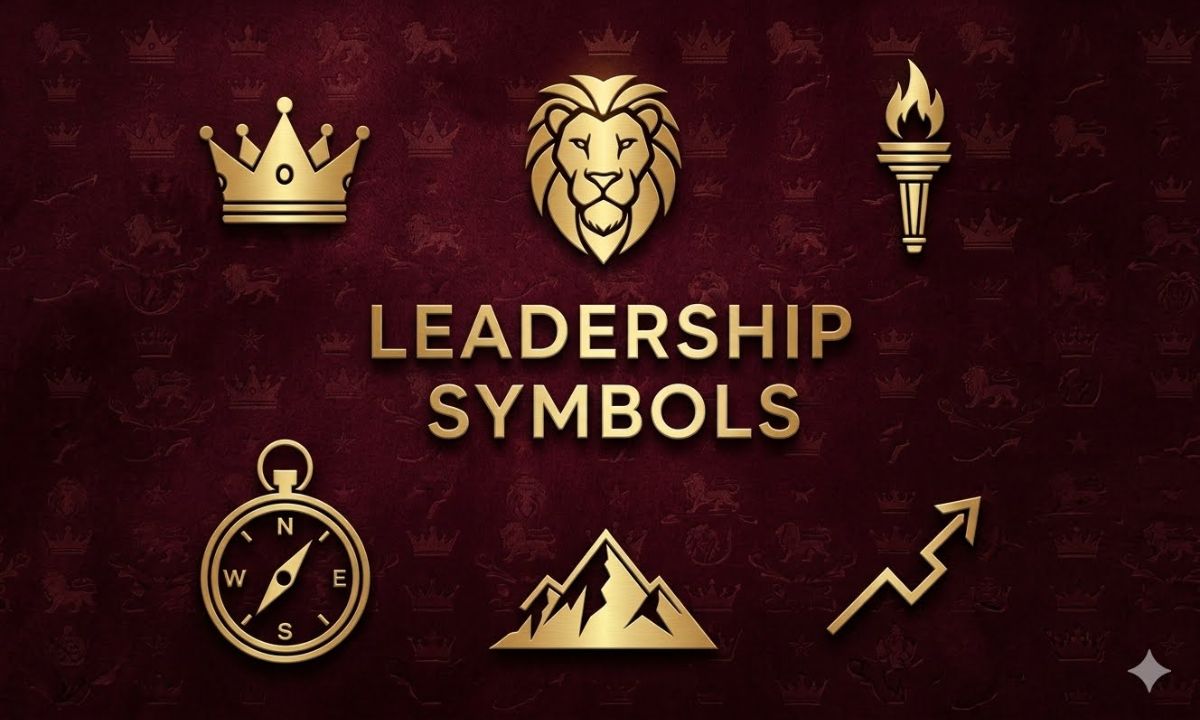
Leadership symbols have inspired people for centuries. From crowns and eagles to staffs and lions, these powerful symbols represent wisdom, authority, courage, and responsibility. Many great leaders throughout history used these symbols to guide and unite others.
Today, legendary leadership symbols still carry important lessons. They remind us to lead with confidence, integrity, and vision. Understanding their meanings can help modern leaders make better decisions and inspire those around them.
What Are Leadership Symbols?
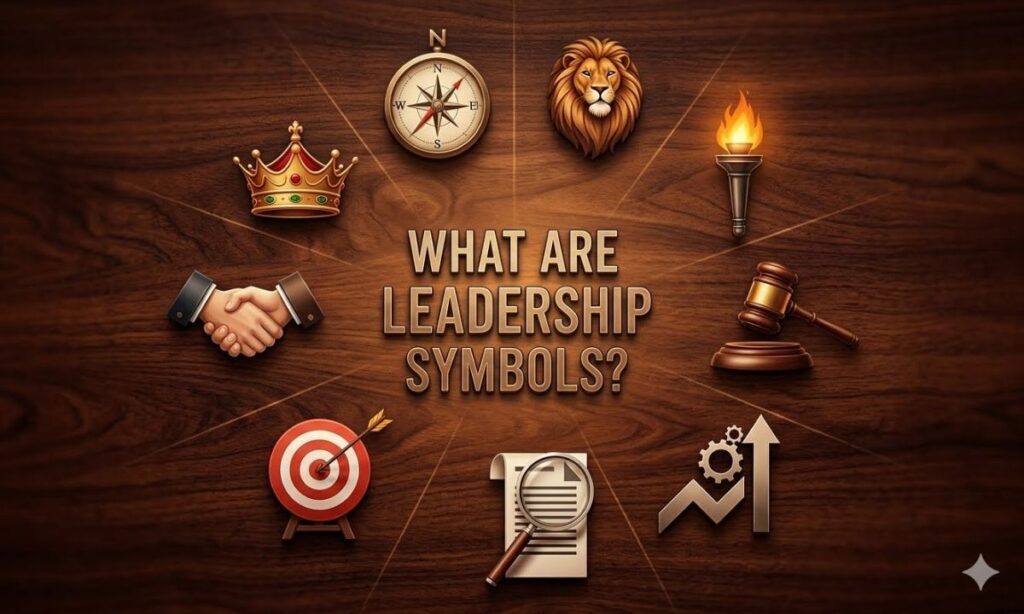
Leadership symbols are visual, cultural, or object-based representations of authority, guidance, and influence. They signal who carries responsibility, who protects the group, and who makes the decisions that affect everyone.
Across human history, these symbols took the form of crowns, staffs, thrones, sacred animals, and ritual objects. Ancient societies used them to legitimize rulers, build loyalty, and create an emotional distance between leaders and followers. Their core function never changed: to make leadership visible, believable, and emotionally compelling.
Today, leadership symbols show up as corporate logos, military insignia, political emblems, personal tattoos, and even the cut of a business suit. They speak to something hardwired in us.
Leadership Symbols And Meanings Across Cultures And History
Symbols Of Leadership With Meaning
Every leadership symbol carries a layered meaning that goes beyond its surface appearance. A crown is not just a headpiece; it carries the weight of sovereignty and the burden of duty. A torch is not just a flame; it represents the transfer of knowledge and the courage to lead through darkness.
Here is a quick reference table of the most recognized leadership symbols and their meanings:
| Symbol | Core Meaning | Common Context |
| Crown | Sovereignty, authority, responsibility | Monarchies, religion, branding |
| Lion | Courage, strength, natural dominance | Heraldry, flags, tattoos |
| Eagle | Vision, power, higher perspective | Empires, military, national seals |
| Torch | Enlightenment, guidance, inspiration | Education, movements, Olympics |
| Compass | Direction, vision, strategic thinking | Navigation, personal development |
| Staff/Scepter | Command, moral authority, guidance | Rulers, prophets, spiritual leaders |
| Dragon | Imperial power, wisdom, cosmic balance | East Asian cultures, Celtic mythology |
| Shield | Protection, defense, resilience | Military, coats of arms, corporate |
| Oak Tree | Strength, endurance, deep-rooted wisdom | Corporate branding, nature symbolism |
| Phoenix | Renewal, resilience, rising from adversity | Mythology, motivational culture |
Symbols Of Leadership In Education
In educational settings, leadership symbols carry a distinct flavor. The graduation cap and gown signal earned authority through knowledge. The torch or lamp represents enlightenment and the spreading of ideas from one generation to the next. The owl, associated with Athena in Greek mythology, remains a universal icon of academic wisdom. Keys symbolize access to knowledge and the unlocking of potential. These symbols remind us that educational leadership is not about control but about opening doors.
Symbols Of Leadership
Broadly, leadership symbols fall into three categories: natural symbols (animals, elements), object-based symbols (crowns, staffs, flags), and abstract symbols (colors, shapes, postures). Each category communicates something specific about the type of leadership being represented. Strength-based leadership leans on lions and shields. Visionary leadership uses eagles and torches. Servant leadership draws on hands, trees, and bridges.
Visual And Creative Leadership Symbol Designs
Symbol Of Leadership Images
Leadership symbol images are widely used in websites, presentations, books, and brand materials. The most effective ones are simple, bold, and instantly recognizable. A single crown silhouette communicates more in a half-second glance than a paragraph of text. When choosing or creating leadership symbol images, clarity of shape and strength of contrast matter most.
Pictures Of Leadership Symbols
Pictures of leadership symbols appear across educational materials, motivational content, and organizational branding. The most powerful pictures combine a recognizable icon with emotional resonance. Think of the American bald eagle, the British lion and unicorn on a royal seal, or the torch in the Olympic logo. Each works because it connects a visual form to a widely understood value.
Leadership Symbols Images
When using leadership symbols in digital content, resolution, color contrast, and cultural context all matter. A symbol that inspires trust in one culture may carry a different meaning in another. Designers working with leadership imagery should research both the historical origin and the current cultural reading of any symbol before deploying it.
Leadership Symbols Black And White
Black and white leadership symbol designs are popular for logos, official documents, stamps, and minimalist artwork. Stripping away color forces the symbol to stand entirely on its shape and silhouette, which tests whether it is truly strong as a design. Many of the most enduring leadership logos, from military badges to university seals, work perfectly in black and white.
Leadership Symbols Clip Art
Leadership symbols in clip art form are useful for educators, bloggers, and content designers who need clean, scalable graphics. Common clip art symbols include crowns, eagles, stars, torches, and shields. These simplified versions preserve the core meaning of the original symbol while making it practical for everyday design use.
Leadership Symbol Designs In Art And Personal Expression
Leadership Symbol Drawing
Drawing leadership symbols is a practice that goes back to cave paintings and temple walls. Artists across every era have used visual symbols to communicate ideas about power that words could not fully capture. Today, hand-drawn leadership symbols appear in everything from sketchbooks to murals. The act of drawing them is itself an exercise in understanding what leadership means to the individual creating them.
Leadership Symbol Tattoo
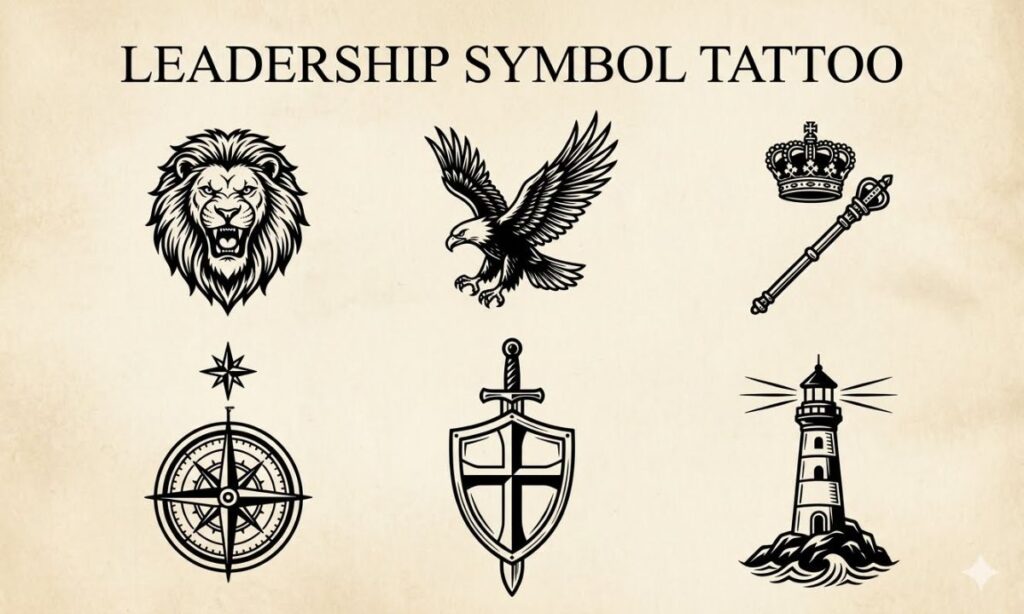
Leadership symbol tattoos are chosen by people who want to carry a permanent reminder of their values and commitments. The most popular choices include:
- Lion — courage and natural authority
- Crown — responsibility and earned power
- Eagle — vision and ambition
- Compass — direction and purposeful living
- Anchor — stability and grounded leadership
- Phoenix — resilience and the ability to start again
Each choice reflects how the individual understands leadership and what qualities they aspire to embody.
Logo Leadership Symbols
The best leadership logos combine a powerful symbol with a clean design that works across all sizes and contexts. Companies choose eagles for aerospace and defense firms, shields for security and insurance brands, and mountains for organizations emphasizing challenge and achievement. The symbol does not just decorate the logo; it tells the audience what the organization stands for before a single word is read.
Historical And Cultural Leadership Symbols
Ancient Symbols Of Leadership
Ancient civilizations developed some of the most enduring leadership symbols in human history. The pharaonic crook and flail of Egypt, the Roman eagle standard, the Greek laurel wreath, and the Chinese imperial dragon all originated as tools of legitimacy, and all remain culturally recognizable today.
Ancient Leadership Symbols
Here are some of the most significant ancient leadership symbols and the civilizations that used them:
- Crook and Flail (Egypt) — represented the pharaoh’s dual role as shepherd and judge of the people
- Laurel Wreath (Greece/Rome) — awarded to victors and leaders who earned their authority through achievement
- Dragon (China) — embodied imperial authority, cosmic harmony, and divine connection
- Fasces (Rome) — a bundle of rods around an axe symbolizing collective strength and judicial authority
- Sphinx (Egypt/Greece) — combined the lion’s body with a human head to represent the unity of physical power and intellectual wisdom
- Ankh (Egypt) — symbolized life and divine authority, carried by pharaohs as a mark of their god-like status
- Tabono (West Africa) — four connected oars representing perseverance, strength, and purposeful effort
Coat Of Arms Leadership Symbols
Coats of arms were the medieval world’s version of a corporate identity system. Each heraldic design combined animals, colors, crowns, shields, and mottos to communicate a noble family’s values, history, and authority. Lions appeared most frequently, followed by eagles, crosses, and celestial symbols. These designs were legally protected and visually communicated lineage and legitimacy at a glance.
Objects And Things That Represent Leadership
Objects That Represent Leadership
Physical objects have carried leadership meaning across every culture. Some of the most universally recognized include:
- Crown — ultimate symbol of sovereign authority
- Scepter — command and moral power in physical form
- Throne — the seat of judgment and decision-making
- Sword — decisive authority and the leader’s protective role
- Flag — collective identity and shared direction
- Key — access, responsibility, and gatekeeping
- Book — knowledge-based leadership and wisdom
- Compass — strategic direction and purposeful navigation
- Torch — the transmission of knowledge and inspiration
- Shield — protection and defensive leadership
Objects That Represent Leadership Styles
Different objects map naturally to different leadership styles:
| Leadership Style | Representing Object | Why It Fits |
| Authoritative | Crown, Throne | Clear hierarchy, decisive command |
| Visionary | Telescope, Compass | Forward-thinking, direction-setting |
| Servant | Open Hands, Bridge | Support, connection, humility |
| Transformational | Phoenix, Torch | Inspiration, change, new beginnings |
| Strategic | Chess Piece, Map | Planning, calculated decision-making |
Items That Represent Leadership
Smaller personal items also carry leadership symbolism. A pocket watch suggests a leader who values time and punctuality. A pen represents the power to make decisions on paper. A key ring signals responsibility for what others cannot access. Even the way a leader dresses, choosing formal attire over casual, communicates something about how they view their role.
Things That Symbolize Leadership
Nature provides some of the most powerful leadership symbols of all. Mountains represent the challenge of leadership and the elevated perspective that comes with reaching the summit. Rivers suggest steady, persistent forward movement. Oak trees embody deep roots and enduring strength. These natural symbols resonate because they require no cultural explanation; their meaning is felt directly.
Things That Represent Leadership
Things that represent leadership show up in unexpected places. A lighthouse guides ships safely through darkness without controlling them, making it a perfect metaphor for visionary leadership. A bridge connects two separate things, representing the collaborative leader who builds relationships across divides. Even a seed represents leadership potential: small, unassuming, but containing everything needed to grow into something massive.
Leadership Symbols In Power, Strength, And Control
Leader Symbols
The most recognizable leader symbols tend to combine visual strength with cultural weight. The eagle soars above others and sees farther; the lion rules its territory with effortless confidence; the crown sits above everything else, literally elevated. These symbols work because they match universal human associations about what strong leadership looks and feels like.
Symbol Of A Leader
A single symbol of a leader needs to communicate multiple things at once: authority, responsibility, vision, and trustworthiness. No single icon captures all of these perfectly, which is why effective leadership branding often combines symbols. An eagle holding a shield, a crown above a compass, a torch within a circle — these combinations layer meanings to build a richer picture.
Symbol Of Leader
Across different cultures, the symbol of a leader varies based on what that society values most. In cultures that prize martial strength, the sword or shield dominates. Where wisdom is the highest virtue, the book or owl takes precedence. Where spiritual connection is central to leadership, halos, staffs, or sacred animals carry the authority.
Symbol For Leadership
A universally understood symbol for leadership does not exist, because leadership itself means different things in different contexts. What does exist is a shared vocabulary of forms — elevated positions, protective shapes, guiding lights — that most human cultures have independently arrived at as ways to represent the idea of someone who leads.
Symbols For Leadership
The most commonly used symbols for leadership across modern organizations include:
- Eagle — used by governments, military branches, and corporations globally
- Crown — appears in luxury brands, monarchies, and cultural organizations
- Star — represents excellence, achievement, and guiding direction
- Mountain — used in outdoor brands, consulting firms, and educational institutions
- Compass — popular in navigation, personal development, and strategic consulting
- Lion — featured in national symbols, sports teams, and legal/financial firms
Symbols That Represent Leadership
What makes a symbol feel like it represents leadership is a combination of cultural repetition, emotional resonance, and visual strength. The symbols that have lasted thousands of years share certain traits: they are visually bold, emotionally meaningful, and culturally portable enough to travel across generations without losing their core meaning.
Leadership Symbolism
Leadership symbolism is the broader study of how visual signs communicate ideas about power, authority, and influence. It draws from semiotics, anthropology, psychology, and history to understand why certain images consistently trigger feelings of trust, respect, and deference in human beings.
Symbolism For Leadership
Effective symbolism for leadership works on multiple levels simultaneously. On the surface, it identifies who is in charge. Underneath, it communicates the values and style of that leadership. At the deepest level, it connects to universal human needs for safety, direction, and meaning.
Specialized Leadership Symbol Categories
Symbols That Represent Control
Symbols of control tend to emphasize hierarchy, boundary, and command. The throne defines the center of power. The wall or gate marks the edge of territory. The gavel signals the final word in decision-making. These symbols are necessary but can tip from inspiring respect to communicating domination when used without care.
Strength Leadership Symbols
Strength-based leadership symbols draw from nature’s most powerful images: lions, mountains, ancient trees, and stormy seas that someone stands firm against. In organizational contexts, these symbols communicate resilience and the capacity to lead through difficulty.
Military Leadership Symbols
Military leadership symbols are among the most precisely codified in human culture. Stars indicate rank. Eagles represent national authority. Crossed swords signal combat leadership. Medals and ribbons map specific achievements. These symbols function as a complete visual language that communicates a soldier’s history, rank, and role without a single word.
Servant Leadership Symbols
Servant leadership symbols are gentler in form but no less powerful in meaning. Open hands represent giving and support. A bridge connects rather than separates. A tree provides shelter without demanding anything in return. Water flows around obstacles rather than forcing its way through them. These symbols reflect the philosophy that the greatest leaders are those who make others greater.
Leadership Symbols Animals
Animals have served as leadership symbols because they embody specific qualities in pure, undiluted form:
- Lion — courage, confidence, and natural dominance
- Eagle — vision, freedom, and aerial perspective
- Wolf — pack leadership, loyalty, and strategic hunting
- Elephant — wisdom, memory, and protective strength
- Horse — power, freedom, and noble service
- Dragon — imperial authority, cosmic wisdom, and transformation
- Phoenix — resilience, renewal, and rising from failure
- Jaguar — fierce intelligence and predatory precision
Leadership Symbol Media And Visual Resources
Symbol Of Leadership Images
When sourcing or creating leadership symbol images for professional use, the key qualities to look for are: clean silhouette, strong contrast, cultural neutrality (unless specifically targeting one culture), and scalability from small icon to large banner without losing impact.
Leadership Symbols And Meanings
Understanding leadership symbols and their meanings helps communicators choose the right visual for the right context. A startup using a crown in its logo sends a different message than one using a compass. A nonprofit using open hands communicates differently than one using an eagle. The symbol is not decoration; it is a promise about what the organization stands for.
Leadership Symbols Clip Art
For practical content creation, clip art versions of leadership symbols are available across multiple platforms. When selecting clip art for professional materials, preference clean vector designs over raster images, and always consider whether the symbol’s cultural associations match the audience.
Deep Symbolic Meaning of Leadership Symbols
Spiritual Meaning
Spiritually, leadership symbols connect earthly authority to something beyond the human realm. Many cultures held that true leaders were divinely selected, and symbols like halos, sacred animals, and celestial imagery reinforced that connection. The pharaoh’s crook linked him to the divine shepherd. The Chinese emperor’s dragon tied him to cosmic order. Even today, spiritual leaders use specific vestments and objects to signal their connection to a higher authority.
Psychological Meaning
Psychologically, leadership symbols reduce anxiety. When people see a clear symbol of authority, especially during uncertain times, their nervous system responds with a measure of calm. The symbol says: someone knows what is happening and is in charge. This is why crisis communication experts recommend that leaders appear visibly and symbolically in moments of chaos, not just to give information but to embody stability through their presence and visual signals.
Cultural Meaning
Culturally, leadership symbols define who belongs in power and who does not. They encode the values of their time: military culture produces sword and armor symbols; intellectual culture produces book and owl symbols; commercial culture produces keys and compass symbols. Reading a culture’s leadership symbols tells you exactly what that society believes good leadership looks like.
Types and Variations of Leadership Symbols
Crown
Visual: A circular headpiece, usually gold, often jeweled Meaning: Sovereignty, ultimate authority, the burden of responsibility Appears In: Monarchies, luxury branding, religious iconography, fantasy storytelling
The crown is the single most universally recognized leadership symbol on earth. It appears in virtually every culture that developed formal governance, from ancient Egypt to medieval Europe to modern constitutional monarchies.
Lion
Visual: A large, mane-bearing cat with a commanding posture Meaning: Courage, natural dominance, fearless confidence Appears In: National flags, heraldry, sports teams, corporate logos, tattoos
The lion appears as a leadership symbol on more national flags and coats of arms than any other animal. It has represented kings, kingdoms, and commanding authority from ancient Mesopotamia to modern-day Britain.
Eagle
Visual: A wide-winged bird in soaring or perching posture Meaning: Vision, power, elevated perspective, freedom Appears In: National seals, military insignia, corporate logos, political emblems
The eagle’s use as a leadership symbol spans the Roman Empire, the United States, Germany, Mexico, and dozens of other nations. Its ability to soar above the earth and see what others cannot makes it a natural metaphor for visionary leadership.
Throne
Visual: An elevated, ornate ceremonial chair Meaning: Stability, judgment, the seat of decision-making authority Appears In: Royal courts, religious settings, fantasy and historical media
The throne communicates leadership through literal elevation. The person who sits higher than everyone else is the person whose decisions carry the most weight. In modern contexts, the corner office and the head of the boardroom table serve the same symbolic function.
Staff or Scepter
Visual: A long rod, often tipped with a symbolic head Meaning: Command, guidance, moral authority, divine connection Appears In: Ancient rulers, religious figures, ceremonial regalia
The staff appears in leadership symbolism across every major civilization. Moses carried a staff. Egyptian pharaohs carried crooks. Bishops carry croziers. The physical act of holding a staff communicates that the holder guides the direction of travel.
Flag
Visual: Colored fabric bearing symbols, patterns, or emblems Meaning: Collective identity, shared direction, the unity of a group under a leader Appears In: Nations, military units, movements, sports teams
A flag does something no individual leadership symbol can do: it includes everyone. When people rally under a flag, they are joining their individual identities to something larger. The leader who carries or plants the flag is the one they follow.
Leadership Symbols Across Cultures
Ancient Egypt
Egyptian pharaohs used one of the most sophisticated leadership symbol systems ever developed. The double crown combined the red crown of Lower Egypt and the white crown of Upper Egypt, visually representing unified rule. The crook and flail indicated the leader’s dual role as shepherd and judge. Animal-headed gods linked the pharaoh to divine authority. Even the pharaoh’s artificial beard was a leadership symbol, marking the ruler with an attribute of male divine authority regardless of the ruler’s actual gender.
Ancient Greece
Greek leadership symbolism emphasized earned authority rather than inherited divinity. The laurel wreath was awarded, not born into. It honored those who achieved excellence in athletics, military campaigns, or civic leadership. Zeus carried a thunderbolt and a scepter, while Athena’s helmet and owl marked wisdom-based authority. The Athenian democratic model even used physical symbols — pebbles and urns for voting — to distribute leadership symbolically among citizens.
China
The Chinese imperial dragon stands as one of the most complex leadership symbols in world history. Unlike the fearsome dragons of European mythology, the Chinese dragon was a benevolent cosmic force representing harmony, wisdom, fertility, and imperial authority. The emperor was literally called the Son of the Dragon. The dragon’s nine forms each represented a different aspect of imperial virtue, making it a complete symbolic vocabulary for leadership compressed into a single image.
Medieval Europe
Medieval European leadership symbolism was built on the concept of divine right. The crown was not just a sign of earthly authority; it was evidence of God’s selection. Coats of arms distinguished noble families through specific color combinations, animals, and symbols that were legally protected and visually communicated lineage and honor. The sword of a knight represented both martial authority and the chivalric code of conduct that defined what good leadership looked like.
Modern Society
Modern leadership symbols have expanded far beyond royal regalia. Corporate logos function as institutional crowns. Military uniforms encode rank, history, and unit identity in every detail. Political logos condense entire ideological positions into a single image. The business suit replaced the armor and the robe, but it serves the same purpose: immediately signaling that the wearer belongs in a position of authority.
Leadership Symbols in Art, Movies and Pop Culture
Leadership symbols saturate popular culture. In fantasy films, the crown and the throne tell audiences who rules before a word of dialogue. In superhero stories, the cape and the emblem on the chest communicate both authority and the specific values of that hero’s leadership. War films use uniforms and insignia to show hierarchy at a glance. Even the way a character stands, elevated, lit from above, framed centrally, is a visual symbol of leadership borrowed directly from classical portraiture.
In corporate branding, Apple’s bitten apple connects to knowledge and creative courage. Nike’s swoosh suggests forward motion and the spirit of achievement. These modern symbols work on exactly the same psychological principles as a pharaoh’s crook or a general’s stars.
Tattoo culture has become one of the most personal expressions of leadership symbolism. People who choose lion, crown, compass, or phoenix tattoos are making a permanent statement about the leadership qualities they claim as their own.
Spiritual and Dream Meaning of Leadership Symbols
When leadership symbols appear in dreams, psychologists and spiritual traditions agree that they often reflect something important about the dreamer’s inner life. A crown appearing in a dream may indicate readiness to accept greater responsibility or anxiety about whether one is worthy of authority. A broken scepter might signal feelings of lost control or undermined confidence. Seeing an eagle overhead in a dream is frequently interpreted as a call to take a wider view of a situation.
Spiritually, these symbols invite reflection on one’s relationship with power, responsibility, and the people one influences.
Positive vs Negative Meaning of Leadership Symbols
Positive Meaning
- Protection of those in one’s care
- Wisdom in decision-making
- Stability that others can rely on
- Inspiration that elevates the whole group
- Service to something larger than personal interest
Negative Meaning
- Control that removes the agency of others
- Ego that confuses the symbol with the substance
- Oppression that uses authority to harm rather than protect
- Corruption that treats power as a personal possession rather than a public trust
The same crown that represents wise stewardship in one context represents tyranny in another. Symbols are morally neutral; the character of the person who wears them determines whether they inspire or oppress.
Why Humans Are Drawn to Leadership Symbols
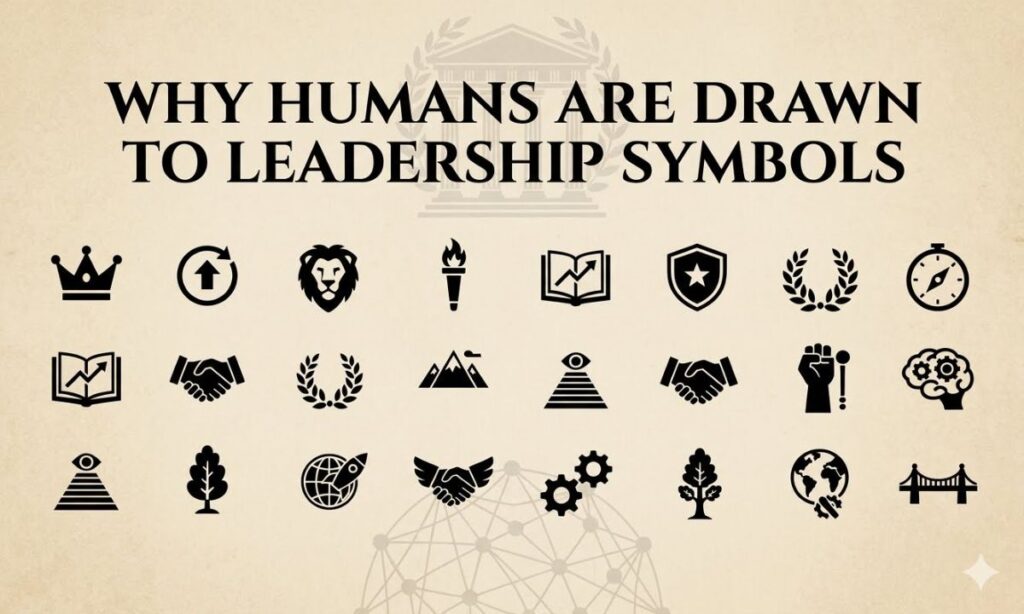
Human beings are pattern-recognition animals who evolved in groups where clear leadership meant survival. In uncertain environments, our brains are actively looking for signals that someone competent is in charge. Leadership symbols provide that signal instantly and emotionally, before rational analysis can even begin.
There is also a deeper dimension: people project their own hopes and fears onto leadership symbols. A person who wants to lead sees the crown and feels aspiration. A person who has suffered under bad leadership sees it and feels caution. The symbol becomes a mirror as much as a message.
This is why leadership symbols are among the most emotionally powerful images in human visual culture. They are not just signs of who leads; they are questions about what leadership should be, and invitations to answer that question yourself.
FAQs About Leadership Symbols
What is the most common leadership symbol worldwide?
The crown is the most universally recognized leadership symbol, appearing across virtually every culture that developed formal governance, from ancient Egypt to modern constitutional monarchies.
Why do animals represent leadership?
Animals embody specific leadership qualities in their pure, natural form — the lion’s courage, the eagle’s vision, the elephant’s wisdom — making them immediately intuitive symbols for human qualities we associate with great leaders.
Do leadership symbols still matter today?
Absolutely. Corporate logos, military insignia, political emblems, and even dress codes continue to function as leadership symbols that shape how we perceive and respond to authority every single day.
Can leadership symbols appear in dreams?
Yes. A crown may reflect readiness for responsibility, a broken staff may signal self-doubt, and a soaring eagle often represents the dreamer’s ambition or desire for broader perspective.
Are leadership symbols always positive?
No. The same symbol that represents wise authority in one context can signal tyranny or ego in another. The moral weight of a leadership symbol depends entirely on the character of the person who carries it.
Why do leaders use symbols instead of words?
Symbols communicate authority instantly and emotionally, bypassing rational analysis to trigger trust, calm, and deference at a gut level — something no spoken or written statement can achieve as quickly.
Conclusion
Leadership symbols are not decorations of power. They are an emotional language refined across thousands of years of human civilization, encoding what we believe leadership should look and feel like. From the pharaoh’s crook to the corporate eagle to the compass tattooed on someone’s forearm, these symbols carry the weight of every leader who ever wore or carried them, and every person who ever looked to them for direction.
Understanding leadership symbols helps you read the world more clearly. It helps you see what organizations value, what leaders are claiming about themselves, and whether their symbols match their actions. Most importantly, it invites you to ask which symbols resonate with you — and what kind of leader those symbols say you want to become.

Steve Carell writes simple Symbol Meanings articles on primemegzine.com, helping readers easily understand signs, symbols, and hidden meanings.