Mental health symbols quietly carry the weight of emotions that words often fail to capture. A semicolon tattooed on a wrist, a green ribbon pinned to a jacket, a lotus flower drawn in the margins of a journal — each one tells a story without saying a single word.
These small images have become a shared visual language for hope, struggle, and healing. Whether you’ve spotted them on social media, in a tattoo parlor, or in a friend’s artwork, this guide breaks down what they actually mean and why they matter so much to the people who use them.
What Are Mental Health Symbols?
Mental health symbols are visual representations that express emotions, psychological states, healing journeys, and inner resilience. They work as a bridge between what someone feels internally and what they’re able to show the outside world.
Symbols have always been part of human communication. Long before modern psychology existed, people used carvings, drawings, and markings to express ideas about suffering, survival, and renewal. Over generations, many of these evolved into symbols specifically tied to emotional and mental well-being.
Today, mental health awareness has reshaped older symbols while creating entirely new ones. They show up in therapy sessions, tattoo studios, awareness campaigns, and everyday social media posts, helping people feel seen and less alone in what they’re going through.
Mental Health Symbols And Meanings
Mental Health Symbols Tattoos
Mental health tattoos typically represent strength, healing, hope, and emotional survival. Many people choose understated designs like semicolons, butterflies, lotus flowers, or anchors as daily reminders of how far they’ve come. These tattoos build a personal connection to recovery while quietly raising awareness wherever they’re seen.
Symbols Of Mental Health Recovery
Recovery-focused symbols tend to center on healing, positivity, and forward movement after hard seasons. Common choices include the phoenix, green ribbon, rising sun, and broken chain, each representing resilience and emotional freedom in a different way. These designs give people something hopeful to hold onto during an ongoing recovery journey.
Mental Health Symbols Copy Paste
Plenty of people search for simple copy-paste symbols to use in social media bios, captions, or supportive messages. Popular picks include ♡, ☀, ♾, ;, and 🦋, since each one quietly signals hope, support, or emotional balance. They’re an easy way to share a meaningful message without writing a long explanation.
Mental Health Tattoos
Beyond their visual appeal, mental health tattoos act as personal reminders of survival and courage. Some people prefer minimalist line work, while others choose detailed artwork tied directly to anxiety, depression, or a specific recovery milestone. Either way, the tattoo becomes a way to express something that’s often hard to put into words.
Mental Health Symbol Emoji
Emoji-based symbols have become an easy shorthand for emotional expression online. The green heart 💚, butterfly 🦋, sunflower 🌻, and semicolon-style punctuation are widely used across awareness posts and supportive messages. They add a warm, approachable feel to digital conversations about mental health.
Mental Health Symbol Drawing
Hand-drawn symbols show up often in awareness campaigns, posters, and art-therapy exercises. Artists frequently sketch semicolons, hearts, trees, butterflies, or abstract shapes to represent healing and inner strength. Even a simple drawing can carry a surprisingly powerful message.
Popular Symbols For Mental Health Awareness
Semicolon Symbol Meaning Mental Health
The semicolon symbol meaning in mental health is tied directly to hope and the choice to keep going. It gained traction through suicide-prevention and awareness movements encouraging people to continue through depression, anxiety, and emotional pain. In grammar, a semicolon connects two sentences instead of ending one — in mental health, it represents a pause, not an ending.
Symbol For Mental Illness
A symbol for mental illness often reflects emotional struggle, ongoing recovery, or a battle that isn’t always visible to others. Different communities lean on different signs, including broken circles, storm clouds, and semicolons, to build understanding and compassion. These symbols are a reminder that mental health challenges deserve real care, not silence.
Symbols For Mental Health Awareness
Awareness symbols exist to help communities support emotional wellness and chip away at stigma. Green ribbons, butterflies, lotus flowers, and open circles show up consistently across campaigns, fundraisers, and support programs. Their familiarity makes it easier to start conversations that might otherwise feel uncomfortable.
Mental Health Symbolism
Mental health symbolism draws heavily from nature, since flowers, birds, trees, and waves naturally represent growth and emotional balance. This connection to the natural world makes complex psychological ideas feel more relatable and easier to sit with.
Mental Symbols
Mental symbols broadly cover any visual representation tied to emotions, thoughts, or psychological experience. They show up across art, tattoos, therapy resources, and awareness materials, often communicating more in a single image than paragraphs of text could.
Symbols Of Mental Health
Symbols of mental health are commonly used to encourage positivity, emotional care, and self-awareness. The green ribbon, lotus flower, butterfly, and semicolon appear again and again because they represent healing and personal growth in ways people instantly recognize.
Symbols For Mental Illness
These symbols are typically used to spread awareness and ease the shame that can surround emotional struggles. They serve as a visual reminder that mental health conditions are real, common, and worthy of support rather than judgment.
Symbols Of Suffering
Symbols of suffering tend to represent emotional pain and difficult life experiences rather than recovery itself. Dark clouds, broken hearts, rain, and wilting flowers are common images tied to sadness and mental strain, often used in art to express what’s hard to say aloud.
Symbols Mental Health
Searches in this space usually point toward tattoos, awareness icons, and healing-related artwork. Despite their simple appearance, these symbols frequently carry deep personal meaning for the people who choose them.
Symbols For Mental Health
These symbols encourage self-care, emotional strength, and recovery awareness across a wide range of contexts. People connect with them because they offer comfort and a quiet sense of hope, especially during harder stretches of life.
Mental Health Tattoo And Illustration Meanings
Genogram Mental Health Symbols
Genogram symbols are used in psychology and counseling to map family relationships and emotional history across generations. Therapists rely on them to spot patterns connected to behavior, trauma, and inherited mental health conditions, making them a practical clinical tool rather than a decorative one.
Men’s Mental Health Symbols
Symbols aimed at men’s mental health often emphasize strength, openness, and breaking down stigma around emotional expression. Lions, anchors, wolves, and semicolons are frequently chosen because they combine a sense of resilience with quiet emotional courage.
Tattoos Mental Health Symbols And Meanings
Every meaningful tattoo design tends to reflect a personal story of survival, healing, or self-acceptance. For many people, these tattoos become lifelong reminders of a specific turning point or ongoing inner strength.
Mental Health Symbols And Their Meanings
Meanings can shift depending on culture and personal experience, even when the symbol itself looks the same. Some represent peace and healing, while others lean more toward awareness or active emotional growth. Understanding these layers makes the symbols feel far more personal.
Mental Health Symbols And Meanings Tattoos
These tattoos blend artistic expression with emotional storytelling in a way few other art forms can. People often choose designs tied to a specific recovery milestone, a loved one, or a personal mantra they want permanently close to them.
Depression Mental Health Symbols
Depression-related symbols frequently point to themes of emotional pain, isolation, and the hope of eventual recovery. Rain clouds, broken hearts, fading flowers, and the semicolon are among the most commonly used images in this space, offering a way to express feelings that are hard to say out loud.
Positive Mental Health Symbols
On the brighter end, positive symbols focus on happiness, emotional balance, and inner peace. Butterflies, sunshine, lotus flowers, and growing trees are popular because they visually represent transformation and a healthier mindset.
Mental Health Symbols Illustration
Illustrated symbols appear constantly in blogs, posters, and therapy resources because they make emotional topics easier to digest visually. A well-designed illustration can communicate in seconds what might otherwise take paragraphs to explain.
Childhood Mental Health Symbols Illustration
Illustrations made for children typically use bright colors, smiling clouds, hearts, and calming nature imagery to support emotional learning. This style helps young readers process feelings in a way that feels safe rather than overwhelming.
Childhood Mental Health Symbols Images
Images designed for school and therapy settings tend to focus on kindness, emotional safety, and confident communication. Friendly visuals make it easier for children to approach topics that adults sometimes find difficult to explain plainly.
Anxiety Mental Health Symbols
Anxiety-related symbols often represent overthinking, emotional stress, or the slow journey toward calm. Waves, spirals, clouds, and grounding imagery are common because they visually mirror what anxiety can feel like from the inside.
Mental Health Symbols Clipart
Clipart versions of these symbols are widely used in classroom materials, presentations, and social media graphics. Their simplicity makes them easy to drop into awareness campaigns without losing the emotional weight behind the image.
Deep Symbolic Meaning
Mental health symbols carry layered meaning that touches several different parts of human experience at once.
Spiritual Level
On a spiritual level, many of these symbols represent transformation and rebirth. They lean into the idea that pain isn’t permanent and that real growth often comes out of difficult periods, suggesting that emotional struggle can be part of a deeper personal journey.
Psychological Level
Psychologically, symbols give shape to feelings that are otherwise hard to describe. Anxiety, depression, and trauma can feel abstract and isolating, but a symbol makes that experience tangible. For someone navigating depression, wearing or drawing a symbol of survival can become a quiet, ongoing reminder of their own strength.
Cultural Level
Culturally, these symbols reflect experiences shared across very different societies. Interpretations vary from place to place, but the underlying themes — pain, hope, resilience, renewal — stay remarkably consistent, often uniting people across borders in shared mental health movements.
Types and Variations of Mental Health Symbols
Each of the symbols below carries its own story, history, and emotional weight.
| Symbol | Core Meaning | Common Use |
| Semicolon | Continuation, survival, choosing to keep going | Tattoos, awareness campaigns |
| Green Ribbon | Awareness, advocacy, support | Campaigns, clothing, events |
| Lotus Flower | Growth through adversity, transformation | Spiritual art, tattoos, meditation |
| Butterfly | Transformation, rebirth, change | Tattoos, therapy symbolism, art |
| Anchor | Stability, grounding, hope | Tattoos, jewelry |
| Phoenix | Rebirth, resilience, overcoming trauma | Mythology, art, tattoos |
| Infinity Symbol | Endless strength, ongoing journey | Jewelry, tattoos |
1. Semicolon
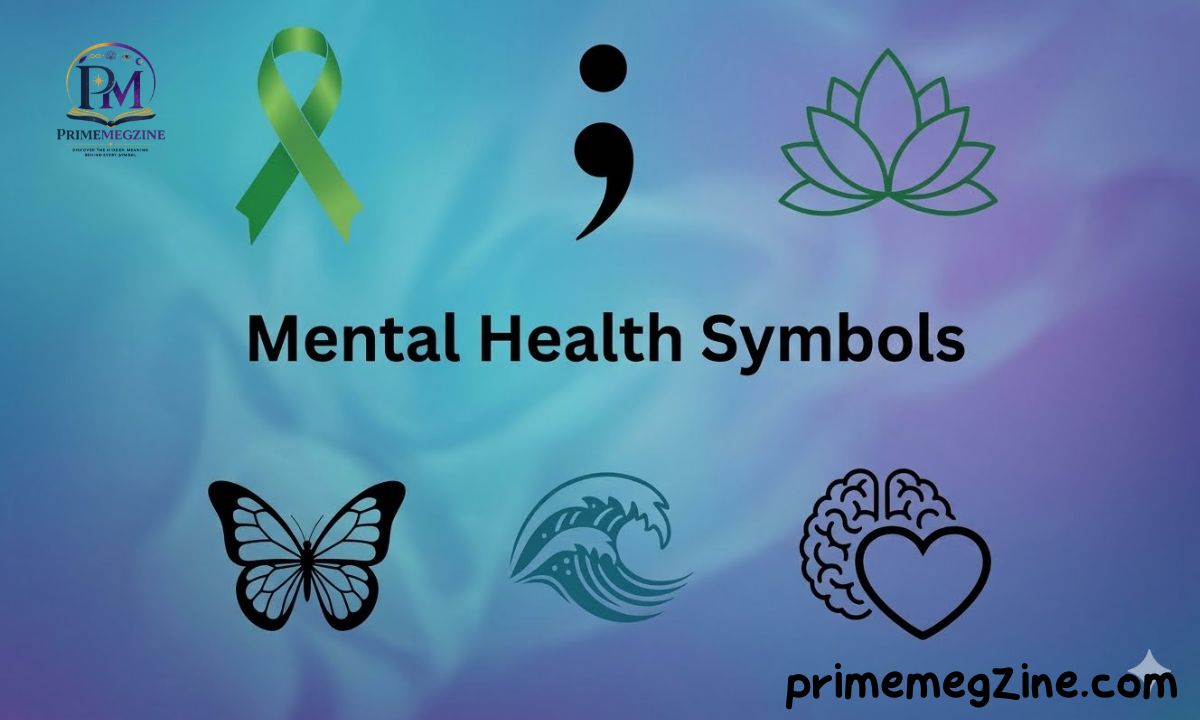
A semicolon is a punctuation mark with a dot positioned above a comma, but in the mental health space it represents far more than grammar. It symbolizes a sentence the writer could have ended but chose not to, which is exactly why it’s become one of the most recognized symbols tied to suicide prevention and continued life.
2. Green Ribbon
The green ribbon is a simple awareness ribbon that has become a global signal of mental health support and advocacy. Green itself is associated with growth and renewal, which is part of why the color was chosen to represent ongoing efforts to reduce stigma.
3. Lotus Flower
The lotus flower rises from muddy water before blooming on the surface, which makes it a natural fit for stories about healing through hardship. It’s widely used in spiritual art and tattoos to represent rising above struggle and finding a sense of peace despite difficult circumstances.
4. Butterfly
The butterfly’s journey from caterpillar to its final winged form mirrors personal transformation in a way many people find deeply relatable. It’s frequently chosen by survivors of mental health struggles as a way to mark their own emotional growth and healing.
5. Anchor
An anchor represents staying grounded during emotional storms, which is why it’s such a common choice for both tattoos and jewelry. It serves as a steady reminder that even in difficult moments, there’s something solid to hold onto.
6. Phoenix
The phoenix is a mythical bird said to be reborn from its own ashes, making it a powerful symbol for rebuilding after emotional destruction. It’s especially popular among people who associate their recovery with a complete personal transformation.
7. Infinity Symbol
Shaped like a sideways figure eight, the infinity symbol reflects the idea that healing isn’t a single finish line but an ongoing process. It’s a popular choice for jewelry and tattoos meant to represent continuous strength rather than a one-time achievement.
Mental Health Symbols Across Cultures
Mental health symbolism isn’t limited to one culture or country — it shows up in different forms throughout history.
Ancient Egypt
Symbols like the ankh represented life and eternal existence in ancient Egyptian culture. While not labeled as mental health symbols at the time, they reflected balance and harmony, ideas that remain central to emotional well-being today.
Eastern Traditions
In cultures shaped by Buddhism and Hinduism, the lotus has long represented spiritual awakening and emotional purity. Meditation practices in these traditions often use symbolic imagery to support inner healing.
Greek Mythology
Mythological figures like the phoenix carry strong themes of rebirth and resilience that closely echo modern recovery symbolism. These ancient stories explored human suffering and renewal long before mental health became a mainstream conversation.
Indigenous Cultures
Many Indigenous traditions rely on circular symbols, such as the medicine wheel, to represent balance and connection. In these frameworks, emotional health is treated as part of a larger harmony with nature and community rather than something separate.
Modern Western Culture
In contemporary Western culture, the semicolon and green ribbon have become the dominant mental health symbols. Their popularity reflects a growing willingness to talk openly about emotional struggles and recovery.
Mental Health Symbols in Art, Movies and Pop Culture
Movies
Films often lean on visual metaphors to depict mental health struggles without stating them outright. Butterflies, shattered mirrors, and rising flames are common choices for showing transformation or inner conflict on screen.
Paintings
Visual artists have long used symbolic imagery, color, and recurring motifs to express emotional pain and healing. A single painting can capture a psychological state that might take pages of writing to describe.
Books
Literature frequently leans on symbolism to add psychological depth without spelling everything out. A storm might represent anxiety, while light breaking through clouds can signal hope on the horizon.
Tattoos
As covered earlier, tattoos remain one of the most personal and visible ways people carry mental health symbolism with them daily. Each design typically marks a specific moment, struggle, or milestone in someone’s story.
Fashion
Clothing brands and accessory designers increasingly feature mental health symbols, helping normalize the conversation in everyday settings. A simple ribbon pin or semicolon necklace can quietly open the door to a much bigger conversation.
Spiritual and Dream Meaning of Mental Health Symbols
When these symbols show up in dreams or meditation, they often carry meaningful messages worth paying attention to. Seeing a butterfly in a dream may point to personal transformation, while a lotus might suggest emotional healing or spiritual growth. An anchor appearing in a dream could signal a need for more stability in waking life.
Spiritually, many people interpret these symbols as a form of guidance, encouraging reflection on where they currently stand in their journey. Since the subconscious mind tends to communicate through imagery rather than words, recognizing these patterns can help surface emotions that haven’t been fully processed yet.
Positive vs Negative Meaning
Mental health symbols are powerful precisely because they hold both light and darkness at the same time. A semicolon represents survival, but it only makes sense in the context of acknowledged struggle. The phoenix symbolizes rebirth, but only after destruction. The lotus represents beauty, yet it grows directly out of mud.
This duality is part of what makes these symbols feel so human:
- Positive meanings include hope, resilience, growth, and healing
- Negative aspects can include struggle, trauma, and emotional pain
Together, these two sides create a fuller, more honest picture of what real recovery looks like.
Why Humans Are Attracted to These Symbols
People are naturally drawn to symbols because they simplify emotions that are otherwise hard to put into words. When someone feels overwhelmed, a symbol can express what language can’t quite reach, becoming a kind of silent companion during difficult stretches of life.
Psychologically, symbols support emotional processing by giving people a sense of comfort, identity, and belonging. There’s also a real emotional pull at play — spotting a symbol tied to your own struggle can make you feel understood, even by someone who has no idea what you’ve personally been through.
This shared recognition is also what builds community. When people display the same symbol, it creates an unspoken connection rooted in similar experiences and mutual support.
FAQs
What is the most common mental health symbol?
The semicolon is one of the most widely recognized mental health symbols worldwide. It represents the choice to continue living despite ongoing struggles.
Why is the green ribbon used for mental health?
The green ribbon symbolizes awareness, hope, and support for people facing mental health challenges. Green was chosen because it’s closely associated with growth and renewal.
Can mental health symbols help with healing?
Yes, many people find genuine comfort and motivation in these symbols. They serve as ongoing reminders of resilience and personal progress.
Are mental health symbols universal?
Some symbols are recognized globally, while others vary depending on culture and region. Even so, the underlying themes of healing and resilience tend to stay consistent everywhere.
Why do people get mental health tattoos?
People typically choose these tattoos to represent their personal journey, survival, or ongoing strength. It’s a deeply individual way to carry a meaningful story permanently.
Conclusion
Mental health symbols are far more than simple images — they’re quiet storytellers of pain, hope, and transformation. They remind us that even in the hardest moments, there’s still meaning to be found and progress still possible.
Each symbol carries the same underlying message: healing isn’t about erasing struggle, but learning to rise through it. Whether it’s a semicolon, a butterfly, or a lotus, every symbol represents a journey that’s still continuing. And in learning what these symbols truly mean, you might just understand your own story a little better too.

Steve Carell writes simple Symbol Meanings articles on primemegzine.com, helping readers easily understand signs, symbols, and hidden meanings.